


Greece has the unique distinction of celebrating the start of war on both its national holidays, March 25th and October 28th, rather than the end, as is customary in most countries. We discussed October 28th and Greece’s entry into World War II just a few months ago in The Good, the Bad and the Ugly Invader. March 25th commemorates the start of the Greek Revolution in 1821. To be precise, the Greeks had begun hostilities a few days earlier in the Peloponnese (and a few weeks before in Moldavia-Wallachia, today’s Romania), but in 1838, the government of King Otto I of Greece (a Bavarian) established March 25th as the national holiday by decree, as it coincides with a major religious feast, the Annunciation of the Virgin Mary.
For the global significance of the Greek Revolution and the subsequent creation of the Greek state—the first national state in Europe—we’ve also talked in the past, but today Sir Roderick Beaton will take us through it. He’s the English academic I turn to as a source whenever I want to write about modern Greek history, along with Thomas Gallant and other Anglo-Saxon scholars—there’s a special magic in learning your country’s history from foreigners, because while they love Greece, they present its history without any sentimentality, objectively pinpointing the flaws of the Greeks.
Without further ado, Sir Roderick Macleod Beaton*, for Greece Is.
(you can find the text in Greek below translated by me)
Few realize the importance of the Greek Revolution of 1821 for the creation of nation states in Europe and around the world.
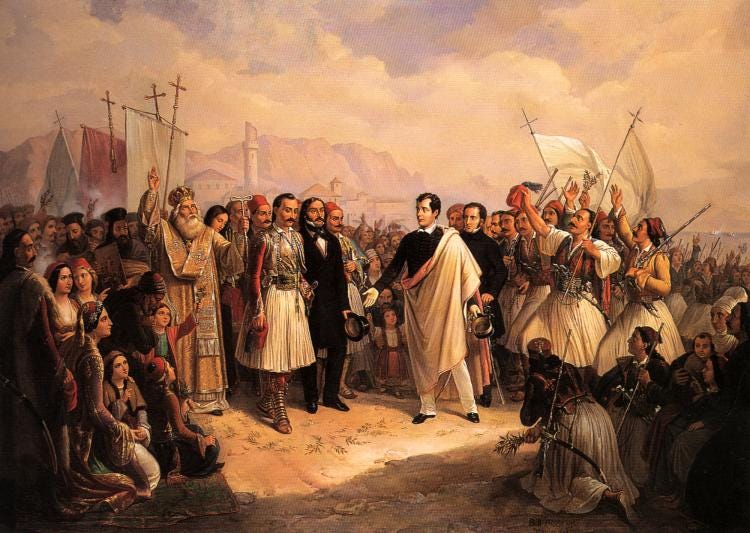
The 1821 Greek Revolution was the first national-liberal movement to succeed in the Old World of Europe – after that in the United States, more or less at the same time as similar liberation movements in South America (between 1811 and 1825), and before every one of the new nation-states that would soon become the norm throughout Europe emerged.
The ideological groundwork had been laid – mostly by thinkers writing in French and German – during the previous century. Greeks didn’t invent the nation-state. But it was in Greece and by Greeks that the experiment was first put into practice in Europe.
The French Revolution, which began in 1789, would more famously transform the political life of the continent, and perhaps of the world, in the long run. But after the rise and fall of Napoleon Bonaparte, and after the Congress of Vienna had established an international order for the whole European continent in 1815, it looked very much as though the clock had been turned back to before 1789.
It was the revolution in Greece, that broke out in the spring of 1821, that began to change all that. The outcome of the Greek Revolution was the pivotal point on which the whole geopolitical map of Europe tilted away from the eighteenth-century model of multi-ethnic, autocratically ruled empires and towards the twentieth-century model of the self-determination of nation-states.
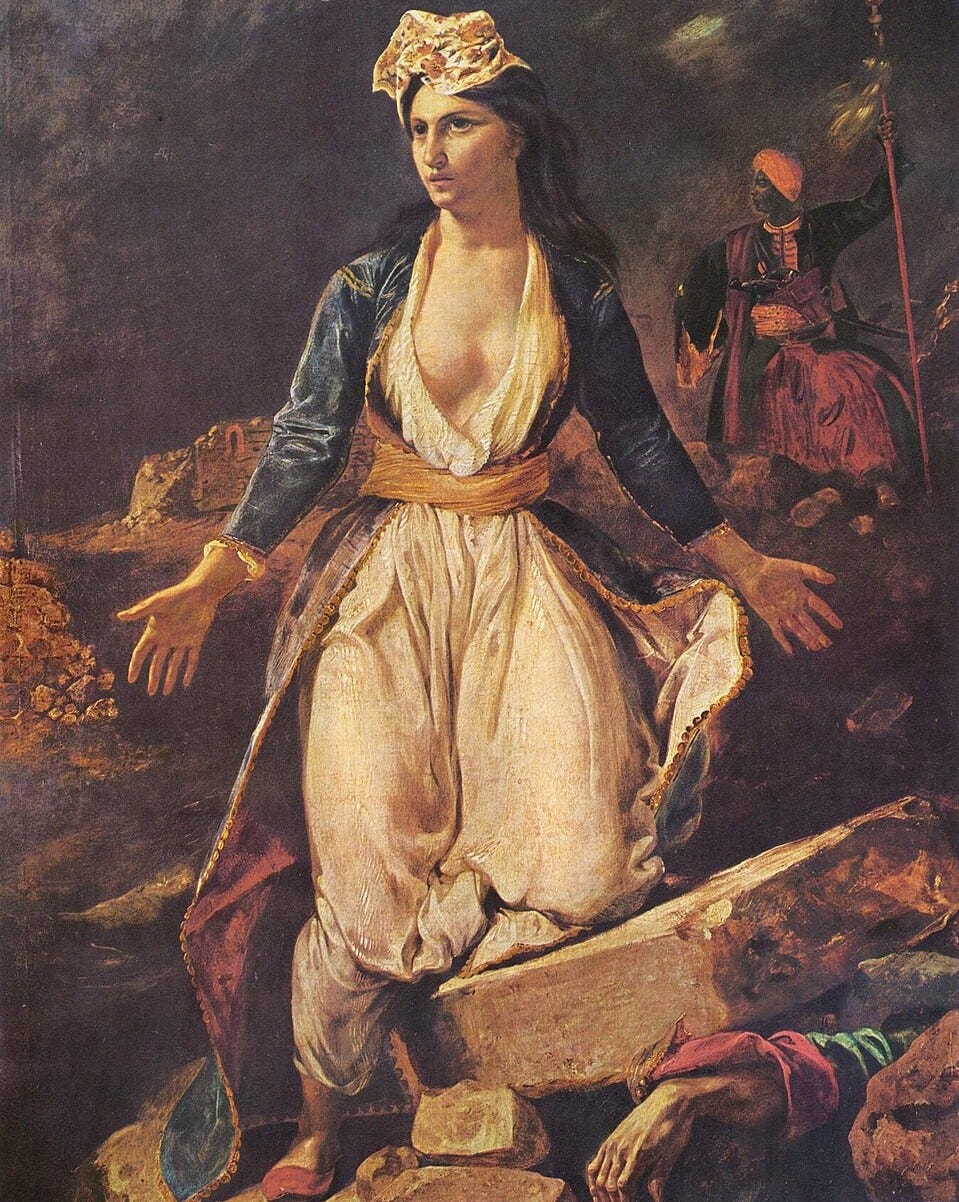
The London Protocol and the Birth of a Nation
One key date and event has often been overlooked or downplayed, even in histories of the Greek Revolution. The decisive moment came on 3 February 1830. It happened not on the battlefield or even in Greece at all, but in a dry conclave of dignitaries held at the British Foreign Office on Whitehall.
On that day the foreign ministers of Great Britain, France and Russia signed a document known as the “London protocol”. It declared, for the first time: “Greece will form an independent State, and will enjoy all those rights – political, administrative, and commercial – attached to complete independence”.
Greece (or Hellas/Ellada in Greek) was born at that moment and took its place on the political map of Europe. The Revolution wasn’t yet over – because it would take another two years for all the details to be worked out, including frontiers and the system of government. But that date in February 1830 marks the turning point.
After that, the list of new European states created on the same model is a long one: Belgium in 1831, Germany and Italy in 1871, Serbia, Romania and Montenegro in 1878, Bulgaria in 1908, Ireland in 1922, Turkey in 1923, to say nothing of the broader redrawing of the map of the continent in the wake of the two world wars and the Cold War of the twentieth century.
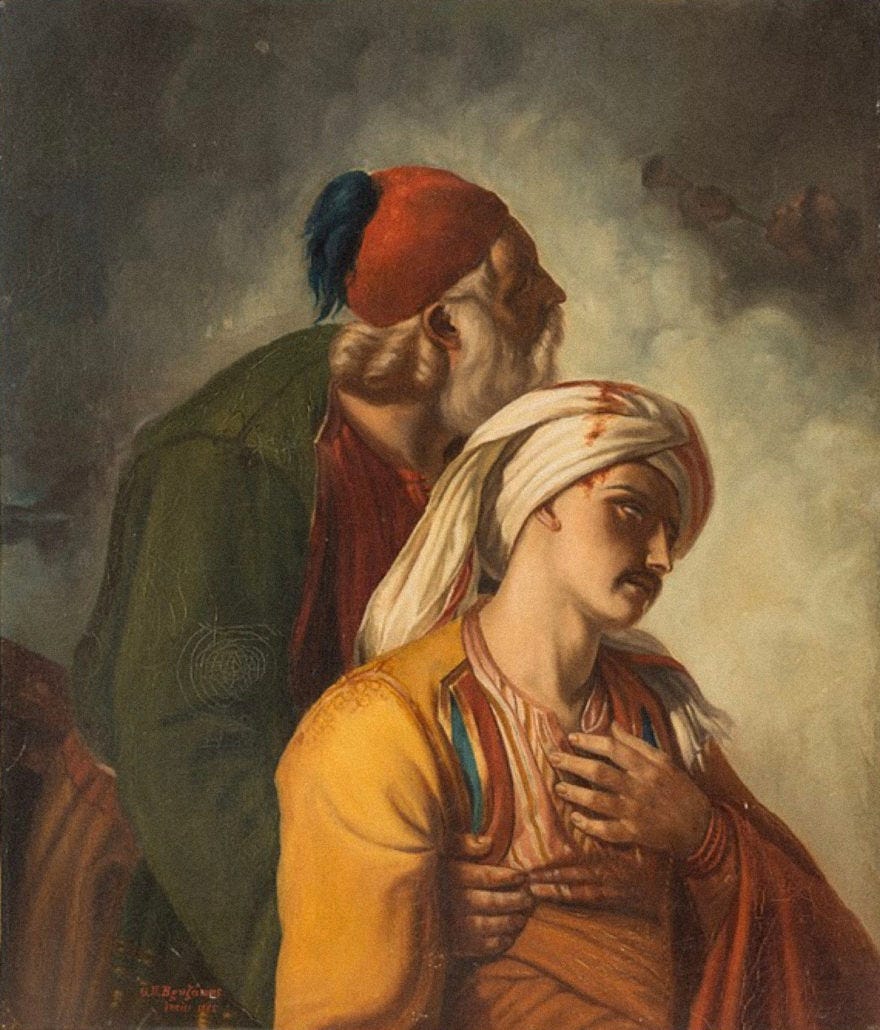
An Exceptional Nation State
The simple fact of this achievement has been missed by historians of Europe, and of the world, because their focus has always been on the bigger players further north and west: France, Germany, Italy.
For quite different reasons, this aspect of the Greek Revolution has also not, so far as I know, been properly recognized by Greek historians either. According to the well-established historical narrative that was consolidated by Spyridon Zambelios and Konstantinos Paparrigopoulos in the 1850s and 1860s, but goes back to the time of the Revolution, Greece was different. Greece was a special case.
Historians call this approach “exceptionalism”. Exceptionalism isn’t unique to Greece and Greeks. Far from it, that’s the thing about exceptionalism – actually, everybody does it.
The Greeks, so the story goes, had formed a nation since ancient times; the struggles of the 1820s had been about restoring that nation to its former, rightful condition; at the time and often thereafter, Greek independence would regularly be described as the “revival”, “regeneration”, or even “resurrection” of the ancient Hellenic civilization.
But the truth is that it wasn’t a restoration at all. The Greek nation-state that we know and love today and which was created out of the Revolution of the 1820s, is like nothing that had ever existed previously in the three-and-a-half-thousand-year history of the Greeks, as we know it through records preserved in their language.
The ancients, with their fixation on the “autonomy” of self-governing, mostly small city-states, never managed to make that leap. The Byzantine state, for all its fabled wealth, power and geographical reach, was something else again, and certainly never chose to define itself as “Hellas” or its people as “Hellenes”, as Greeks have done since 1821.
The nation-state that became a reality during the 1820s and 1830s was every bit as much of a novelty for Greeks – even if you accept the argument of Greek exceptionalism – as it was for the rest of the European continent at the time.
What made the Greek Revolution truly exceptional was that from the very start, it was never a matter for Greeks alone. In the very first declaration of independence, issued by Alexandros Ypsilantis at Jassy in Moldο-Vlahia on 24 February, under the headline “Fight for Faith and Fatherland”, the call went out to the “enlightened peoples of Europe”, who, “full of gratitude for the benefits bequeathed by our Ancestors to themselves, eagerly await the liberty of the Hellenes”.
A month later, in Kalamata, the leader of the Maniates, Petrobey Mavromichalis, addressed this appeal, which was published in several languages:
“We invoke therefore the aid of all the civilized nations of Europe, that we may the more promptly attain to the goal of a just and sacred enterprise, reconquer our rights, and regenerate our unfortunate people.”
The Revolution ultimately succeeded, after great sacrifices, because the wisest and most far-sighted of the Greek leaders during the 1820s saw the advantages of internationalizing their struggle. In this way, and through astute Greek diplomacy, the three great maritime powers of the day, Great Britain, France and Russia, became drawn into a conflict in which none of the three could afford to allow an advantage to either of the others.
When the three powers agreed in the spring of 1827 to send a joint naval taskforce into the Aegean, charged with enforcing a truce between the Greek revolutionaries and the Ottoman forces ranged against them, it was no surprise that the Greeks welcomed this sign of military intervention, while the Ottomans repudiated it. The unintended consequence was the battle of Navarino, which took place on 20 October that year.
The combined Ottoman and Egyptian fleets were all but destroyed by the guns of the British, French and Russian warships. It was a supreme victory for Greek diplomacy – since very few Greeks even had to take part, and very few Greek lives were lost.
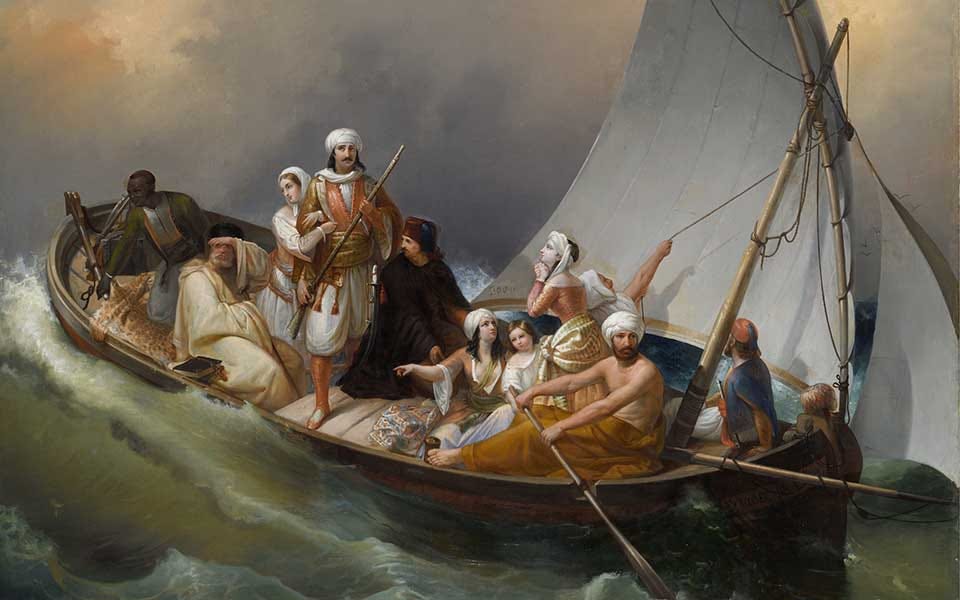
Freedom
From that day, the success of the Greek Revolution was assured. But of course this came at a cost: the eventual settlement had been taken out of Greek hands. It was now up to the three Great Powers to find a resolution. And so that protocol came to be signed in London, on 3 February 1830.
The powers had already decided that the new state must be a monarchy, not a republic as its provisional constitution had declared. Prince Otto, the second son of the philhellene King of Bavaria, Ludwig I, was named as its first king (e.n. after the assassination of its first Governor Ioannis Kapodistrias). Frontiers for the kingdom were determined at the same time. These included only the southern half of mainland Greece as it is today, and those islands closest to it in the Aegean. Neither the Greeks nor the Ottomans had any say in these decisions.
At the time and for long afterwards, even today, many Greeks have felt sore at this outcome. What had been won fell some way short of the absolute ideal of “Liberty or Death” that so many had fought and died for. On the other hand, the revolution had begun with those appeals to the conscience of Europe. And if the outcome had little to do with conscience, and everything to do with geopolitical calculation, it also firmly integrated the newly independent state into the evolving geopolitics of the continent, and indeed of the wider world.
Greece is not alone, among theoretically and legally “sovereign” states, in having so often been obliged to surrender some elements of its sovereignty in return for the security of alliances with others, or for the sake of “protection” by others that are larger and stronger. In practice, in the modern world, all independent states do this, to varying degrees. This is why “America First” and Brexit have brought such havoc, and so little of the promised gains, to their respective nations.
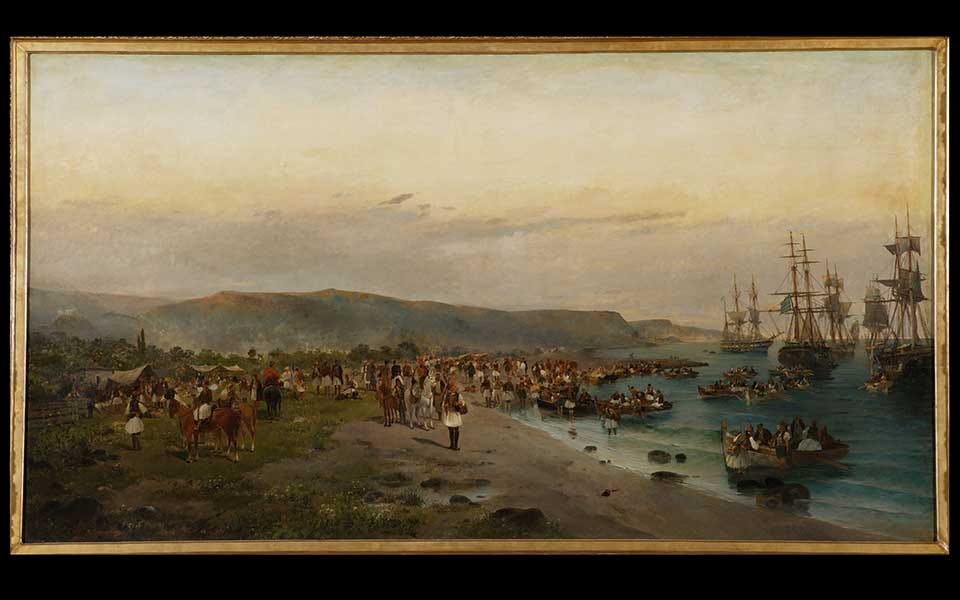
When the future king, Prince Otto, arrived at Nafplio aboard a British warship on 6 February 1833, to a rapturous reception on the shore, the event marked a double first: the first Greek state in all the long history of the Greeks; and the first new nation-state to follow the example of the Americas and win recognition in the Old World of Europe.
* Sir Roderick Macleod Beaton (rod.beaton@kcl.ac.uk), FBA, FKC (born 29 September 1951) is a retired academic. He was a Professor of Modern Greek and Byzantine History, Language and Literature at King’s College London from 1988 to 2018.
Read the full article on Greece Is.
Read also:
American Declaration of Independence and the Greek Revolution of 1821

With heartfelt joy was gladdened Fair Washington’s own land, And recalled the chains that bound her, By tyrant’s cruel hand.
(ακολουθεί το κείμενο στα ελληνικά)
Η Ελλάδα έχει την πρωτοτυπία και στις δύο εθνικές εορτές της, την 25η Μαρτίου και την 28η Οκτωβρίου να γιορτάζει την έναρξη του πολέμου, όχι τη λήξη όπως συνηθίζεται στις περισσότερες χώρες. Για την 28η Οκτωβρίου και την είσοδο της Ελλάδας στον Β΄ Παγκόσμιο Πόλεμο, μιλήσαμε λίγο πριν λίγους μήνες στο The Good, the Bad and the Ugly Invader. Την 25η Μαρτίου εορτάζεται η έναρξη της Ελληνικής Επανάστασης το 1821. Για την ακρίβεια, οι Έλληνες είχαν αρχίσει τις εχθροπραξίες λίγες ημέρες νωρίτερα στην Πελοπόννησο (και λίγες εβδομάδες πριν στη Μολδοβλαχία-τη σημερινή Ρουμανία), αλλά η κυβέρνηση του (Βαυαρού) βασιλιά Όθωνα Α΄ το 1838 καθιέρωσε με διάταγμα την εθνική γιορτή στις 25 Μαρτίου, ημέρα μεγάλης θρησκευτικής εορτής, καθώς εορτάζεται ο Ευαγγελισμός της Θεοτόκου.
Για την παγκόσμια σημασία της Ελληνικής Επανάστασης και την επακόλουθη δημιουργία του ελληνικού κράτους, του πρώτου εθνικού κράτους στην Ευρώπη, έχουμε επίσης μιλήσει στο παρελθόν, αλλά σήμερα θα μιλήσει γι' αυτό ο Sir Roderick Beaton, ο Άγγλος πανεπιστημιακός στον οποίο προστρέχω σαν πηγή όποτε θέλω να γράψω κάτι για την νεότερη ελληνική ιστορία, μαζί με τον Thomas Gallant και άλλους αγγλοσάξωνες-έχει άλλη μαγεία να μαθαίνεις την ιστορία του τόπου σου από ξένους, γιατί ενώ τον αγαπάνε, έχουν την ικανότητα να την παρουσιάζουν χωρίς συναισθηματισμούς, εντοπίζοντας τα κακώς κείμενα όντας αντικειμενικοί.
Του Roderick Beaton* για το Greece is.
Λίγοι αντιλαμβάνονται τη σημασία της Ελληνικής Επανάστασης του 1821 στη δημιουργία εθνικών κρατών στην Ευρώπη και σε όλο τον κόσμο.
Η Ελληνική Επανάσταση υπήρξε το πρώτο φιλελεύθερο-εθνικό κίνημα που πέτυχε στην Παλαιό Κόσμο της Ευρώπης – μετά αυτό των Ηνωμένων Πολιτειών - περίπου την ίδια εποχή με παρόμοια απελευθερωτικά κινήματα στη Νότια Αμερική (μεταξύ 1811 και 1825), και πριν από την εμφάνιση όλων των νέων εθνικών κρατών που σύντομα θα γίνονταν ο κανόνας σε ολόκληρη την Ευρώπη.
Η ιδεολογική προετοιμασία είχε προηγηθεί – κυρίως από στοχαστές που έγραφαν στα γαλλικά και τα γερμανικά – κατά τον προηγούμενο αιώνα. Οι Έλληνες δεν εφηύραν το έθνος - κράτος. Αλλά ήταν στην Ελλάδα και από τους Έλληνες που το πείραμα αυτό εφαρμόστηκε για πρώτη φορά στην Ευρώπη.
Η περίφημη Γαλλική Επανάσταση, που ξεκίνησε το 1789, θα μεταμόρφωνε την πολιτική ζωή της ηπείρου και ίσως του κόσμου, πιο εντυπωσιακά. Αλλά μετά την άνοδο και την πτώση του Ναπολέοντα Βοναπάρτη, και μετά το συνέδριο της Βιέννης που καθιέρωσε μια διεθνή τάξη για ολόκληρη την ευρωπαϊκή ήπειρο το 1815, φαινόταν ότι ο χρόνος είχε γυρίσει πίσω πριν το 1789.
Ήταν η επανάσταση στην Ελλάδα, που ξέσπασε την άνοιξη του 1821, που άρχισε να αλλάζει όλα αυτά. Το αποτέλεσμα της Ελληνικής Επανάστασης αποτέλεσε το κομβικό σημείο πάνω στο οποίο γύρισε όλος ο γεωπολιτικός χάρτης της Ευρώπης, μακριά από το μοντέλο του δέκατου όγδοου αιώνα με πολυεθνικές αυτοκρατορίες που κυβερνώνταν αυταρχικά, και προς το μοντέλο του εικοστού αιώνα με την αυτοδιάθεση των εθνικών κρατών.
Το Πρωτόκολλο του Λονδίνου και η Γέννηση ενός Έθνους
Μια καθοριστική ημερομηνία και ένα γεγονός που συχνά παραβλέπεται ή υποβαθμίζεται, ακόμη και στις ιστορίες της Ελληνικής Επανάστασης: Η αποφασιστική στιγμή ήρθε στις 3 Φεβρουαρίου 1830. Δεν συνέβη στο πεδίο της μάχης ούτε καν στην Ελλάδα, αλλά σε μια ψυχρή σύνοδο αξιωματούχων που έλαβε χώρα στο Βρετανικό Υπουργείο Εξωτερικών στο Whitehall.
Εκείνη την ημέρα οι υπουργοί Εξωτερικών της Μεγάλης Βρετανίας, της Γαλλίας και της Ρωσίας υπέγραψαν ένα έγγραφο γνωστό ως «Πρωτόκολλο του Λονδίνου», το οποίο δήλωνε, για πρώτη φορά: «Η Ελλάς θα αποτελέσει ανεξάρτητο Κράτος και θα απολαμβάνει πάντα τα δικαιώματα – πολιτικά, διοικητικά και εμπορικά – που συνδέονται με την πλήρη ανεξαρτησία».
Η Ελλάδα γεννήθηκε εκείνη τη στιγμή και πήρε τη θέση της στον πολιτικό χάρτη της Ευρώπης. Η Επανάσταση δεν είχε ακόμη τελειώσει – καθώς θα χρειαζόταν άλλα δύο χρόνια για να διευθετηθούν όλες οι λεπτομέρειες, συμπεριλαμβανομένων των τελικών συνόρων και του συστήματος διακυβέρνησης. Αλλά αυτή η ημερομηνία του Φεβρουαρίου 1830 σηματοδοτεί το σημείο καμπής.
Μετά από αυτό, ο κατάλογος των νέων ευρωπαϊκών κρατών που δημιουργήθηκαν με το ίδιο μοντέλο είναι μακρύς: Βέλγιο το 1831, Γερμανία και Ιταλία το 1871, Σερβία, Ρουμανία και Μαυροβούνιο το 1878, Βουλγαρία το 1908, Ιρλανδία το 1922, Τουρκία το 1923, χωρίς να αναφερθούμε στην ευρύτερη επανασχεδίαση του χάρτη της ηπείρου μετά τους δύο παγκόσμιους πολέμους και τον Ψυχρό Πόλεμο του εικοστού αιώνα.
Ένα Ξεχωριστό Εθνικό Κράτος
Το επίτευγμα της Ελλάδας έχει διαφύγει της προσοχής των ιστορικών της Ευρώπης και του κόσμου, επειδή αυτή ήταν τους τελευταίους αιώνες ήταν στραμμένη στους μεγαλύτερους παίκτες πιο βόρεια και δυτικά: Γαλλία, Γερμανία, Ιταλία.
Για εντελώς διαφορετικούς λόγους, αυτή η πτυχή της Ελληνικής Επανάστασης δεν έχει αναγνωριστεί επαρκώς ούτε από τους Έλληνες ιστορικούς, απ’ όσο γνωρίζω. Σύμφωνα με την ιστορική αφήγηση που εδραίωσαν ο Σπυρίδων Ζαμπέλιος και ο Κωνσταντίνος Παπαρρηγόπουλος τη δεκαετία του 1850 και 1860, αλλά που ανάγεται στην εποχή της ίδιας της Επανάστασης, η Ελλάδα ήταν διαφορετική. Η Ελλάδα ήταν ειδική περίπτωση.
Οι ιστορικοί αποκαλούν αυτή την προσέγγιση «εξαιρετικισμό» (exceptionalism). Ο εξαιρετικισμός δεν είναι μοναδικός για την Ελλάδα και τους Έλληνες. Αντίθετα, αυτό ακριβώς είναι το θέμα με τον εξαιρετικισμό – στην πραγματικότητα, όλοι κάνουν το ίδιο.
Οι Έλληνες, σύμφωνα με την ιστορία, είχαν σχηματίσει έθνος από αρχαίων χρόνων· οι αγώνες της δεκαετίας του 1820 αφορούσαν την επαναφορά εκείνου του έθνους στην προηγούμενη, νόμιμη κατάστασή του· την εποχή εκείνη και συχνά μετά, η ελληνική ανεξαρτησία περιγραφόταν τακτικά ως η «αναβίωση», «αναγέννηση», ή ακόμη και «ανάσταση» του αρχαίου ελληνικού πολιτισμού.
Αλλά η αλήθεια είναι ότι δεν επρόκειτο καθόλου για παλινόρθωση. Το ελληνικό εθνικό κράτος που γνωρίζουμε και αγαπάμε σήμερα και που δημιουργήθηκε από την Επανάσταση της δεκαετίας του 1820, δεν έχει όμοιό του με τίποτε άλλο στην τρισχιλιόχρονη ιστορία των Ελλήνων, όπως την γνωρίζουμε μέσα από τα αρχεία που διασώζονται στη γλώσσα τους.
Οι αρχαίοι, με την εμμονή τους στην «αυτονομία» αυτοδιοικούμενων, κυρίως μικρών πόλεων-κρατών, δεν κατάφεραν ποτέ να κάνουν αυτό το άλμα. Το Βυζαντινό κράτος, με όλο του το θρυλούμενο πλούτο, ισχύ και εδαφική έκταση, ήταν κάτι εντελώς διαφορετικό – και ποτέ δεν επέλεξε να ονομαστεί «Ελλάς» ούτε τον λαό του «Έλληνες», όπως κάνουν οι Έλληνες από το 1821 και μετά.
Το εθνικό κράτος που έγινε πραγματικότητα κατά τη δεκαετία του 1820 και 1830 ήταν μία καινοτομία και για τους Έλληνες – ακόμη κι αν δεχτείς το επιχείρημα του της ελληνικής εξαίρεσης – όπως ήταν για την υπόλοιπη ευρωπαϊκή ήπειρο την εποχή εκείνη.
Αυτό όμως που έκανε την Ελληνική Επανάσταση πραγματικά ξεχωριστή ήταν ότι από την αρχή κιόλας, δεν υπήρξε ποτέ υπόθεση μόνο των Ελλήνων. Στην πρώτη διακήρυξη της ανεξαρτησίας, που εξέδωσε ο Αλέξανδρος Υψηλάντης στο Ιάσιο της Μολδοβλαχίας στις 24 Φεβρουαρίου / 8 Μαρτίου 1821, με τίτλο «Μαχού Υπέρ Πίστεως και Πατρίδος», η έκκληση απευθυνόταν στους «φωτισμένους λαούς της Ευρώπης», οι οποίοι, «πλήρεις ευγνωμοσύνης για τα οφέλη που κληρονόμησαν από τους Προγόνους μας, περιμένουν με λαχτάρα την ελευθερία των Ελλήνων».
Έναν μήνα αργότερα, στην Καλαμάτα, ο ηγέτης των Μανιατών, Πετρόμπεης Μαυρομιχάλης, απηύθυνε αυτή την έκκληση, η οποία δημοσιεύτηκε σε αρκετές γλώσσες:
«Καλούμε επομένως σε βοήθεια όλα τα πολιτισμένα έθνη της Ευρώπης, ώστε να φθάσουμε πιο γρήγορα στον σκοπό ενός δίκαιου και ιερού αγώνα, να ανακτήσουμε τα δικαιώματά μας και να αναγεννήσουμε τον δυστυχισμένο λαό μας.»
Η Επανάσταση τελικά πέτυχε, μετά από μεγάλες θυσίες, επειδή οι πιο σοφοί και προνοητικοί από τους έλληνες ηγέτες της δεκαετίας του 1820 είδαν τα πλεονεκτήματα του διεθνοποίησης του αγώνα τους. Με αυτόν τον τρόπο, και μέσω της διορατικής ελληνικής διπλωματίας, οι τρεις μεγάλες ναυτικές δυνάμεις της εποχής, Μεγάλη Βρετανία, Γαλλία και Ρωσία, εμπλέκονταν σε μια σύγκρουση όπου καμία από τις τρεις δεν μπορούσε να επιτρέψει πλεονέκτημα στις άλλες δύο.
Όταν οι τρεις δυνάμεις συμφώνησαν την άνοιξη του 1827 να στείλουν κοινή ναυτική αποστολή στο Αιγαίο, με εντολή να επιβάλει εκεχειρία μεταξύ των ελληνικών επαναστατών και των οθωμανικών δυνάμεων που είχαν απέναντί τους, δεν προκάλεσε έκπληξη που οι Έλληνες καλωσόρισαν αυτή την ένδειξη στρατιωτικής επέμβασης, ενώ οι Οθωμανοί την απέρριψαν. Το επακόλουθο άθελά τους ήταν η ναυμαχία του Ναβαρίνου, που έγινε στις 20 Οκτωβρίου του ίδιου έτους.
Ο τουρκοαιγυπτιακός στόλος καταστράφηκε σχεδόν ολοσχερώς από τα πυροβόλα των βρετανικών, γαλλικών και ρωσικών πολεμικών πλοίων. Ήταν η υπέρτατη νίκη της ελληνικής διπλωματίας – αφού ελάχιστοι Έλληνες χρειάστηκε να συμμετάσχουν, και ελάχιστες ελληνικές ζωές χάθηκαν.
Ελευθερία
Από εκείνη την ημέρα, η επιτυχία της Ελληνικής Επανάστασης ήταν εξασφαλισμένη. Αλλά φυσικά αυτό είχε κόστος: η τελική διευθέτηση είχε πια βγει από τα χέρια των Ελλήνων. Ήταν πλέον ευθύνη των τριών Μεγάλων Δυνάμεων να βρουν λύση. Και έτσι υπεγράφη εκείνο το Πρωτόκολλο στο Λονδίνο, στις 3 Φεβρουαρίου 1830.
Οι Δυνάμεις είχαν ήδη αποφασίσει ότι το πολίτευμα του νέου κράτους, έπρεπε να είναι είναι η μοναρχία, όχι η δημοκρατία που είχε κηρύξει το προσωρινό σύνταγμά του. Ο Πρίγκιπας Όθων, δεύτερος γιος του φιλέλληνα Βασιλιά της Βαυαρίας Λουδοβίκου Α΄, ορίστηκε πρώτος βασιλιάς του (μετά και τη δολοφονία του Έλληνα Κυβερνήτη Ιωάννη Καποδίστρια). Τα σύνορα του βασιλείου καθορίστηκαν την ίδια στιγμή. Αυτά περιλάμβαναν μόνο το νότιο μισό της σημερινής ηπειρωτικής Ελλάδας και τα πιο κοντινά νησιά στο Αιγαίο. Ούτε οι Έλληνες, ούτε οι Οθωμανοί είχαν λόγο σε αυτές τις αποφάσεις.
Τότε και για καιρό μετά, ακόμη και σήμερα, πολλοί Έλληνες ένιωσαν πικρία για αυτό το αποτέλεσμα. Αυτό που είχε κερδηθεί ήταν μακριά από το απόλυτο ιδεώδες του «Ελευθερία ή Θάνατος» για το οποίο τόσοι είχαν πολεμήσει και πεθάνει. Από την άλλη πλευρά, η επανάσταση είχε ξεκινήσει με αυτού του είδους τις επικλήσεις στη συνείδηση της Ευρώπης. Το αποτέλεσμα βέβαια είχε ελάχιστη σχέση με τη συνείδηση και πιο πολύ με πολύπλοκους γεωπολιτικούς υπολογισμούς, εντούτοις ενσωμάτωσε σταθερά το νεοαπελευθερωθέν κράτος στην εξελισσόμενη γεωπολιτική της ηπείρου, αλλά και του υπόλοιπου κόσμου.
Η Ελλάδα δεν είναι η μόνη περίπτωση, από τα «κυρίαρχα» κράτη, που τόσο συχνά έχει υποχρεωθεί να παραχωρήσει στοιχεία της κυριαρχίας της, σε αντάλλαγμα της συμμαχίας με άλλους, ή για χάρη της «προστασίας» από μεγαλύτερους και ισχυρότερους. Στην πράξη, στον σύγχρονο κόσμο, όλα τα ανεξάρτητα κράτη το κάνουν αυτό, σε διαφορετικό βαθμό. Γι’ αυτό το «America First» και το Brexit έφεραν τέτοια καταστροφή, και τόσο λίγα από τα υποσχεθέντα οφέλη, στους λαούς τους.
Όταν ο μελλοντικός βασιλιάς, Πρίγκιπας Όθων, έφτασε στο Ναύπλιο στις 6 Φεβρουαρίου 1833 με βρετανικό πολεμικό πλοίο, εν μέσω εκστασιώδους υποδοχής, το γεγονός ήταν εμφατικό για δύο λόγους: επρόκειτο για το πρώτο ελληνικό κράτος σε ολόκληρη την μακρά ιστορία των Ελλήνων, αλλά και το πρώτο νέο εθνικό κράτος που ακολούθησε το παράδειγμα των Η.Π.Α. και αναγνωρίστηκε στον Παλαιό Κόσμο της Ευρώπης.
Διαβάστε το πλήρες άρθρο στο Greece Is.
O Roderick Beaton είναι Άγγλος συνταξιούχος πανεπιστημιακός. Διετέλεσε καθηγητής Νεοελληνικής και Βυζαντινής Ιστορίας, Γλώσσας και Λογοτεχνίας της έδρας «Κοραής» (Koraes), στο Βασιλικό Κολέγιο του Λονδίνου (King's College London) από το 1988 έως το 2018.
I have always been a Beaton fan! An informative read about how one nation's actions can inspire the world
What makes the Greek Revolution so striking is that it wasn’t just about independence—it redefined what independence meant.
It turned identity into a political force and showed that nations could be imagined into existence—and then fought for.