


Surprisingly (#not), people have been fighting each other ever since they first appeared on this planet and began living in organised communities. What they fight over changes from case to case and can range from the bizarre to the utterly mundane, but the underlying reasons have stayed remarkably consistent: land, water, pasture, hunting grounds, trade routes, wealth and power. When the first organised settlements appeared, kings slowly appeared along with them, and so, naturally, did their tax collectors. It didn’t take long for the reasons behind conflict to acquire a more official vocabulary: sovereignty, honour, national security, rights, the restoration of order.
(for the original text in Greek, scroll down)
Until recently I was under the impression that the oldest recorded conflict between states was the Battle of Megiddo (1457 BC), documented in the annals of Pharaoh Thutmose III, which could fairly be called the oldest military campaign diary in history. Yet the war between Lagash and Umma, two cities of Sumerian Mesopotamia, turns out to be about a thousand years older, with Lagash’s victory commemorated on the Stele of the Vultures, one of the oldest surviving pieces of war propaganda. The pattern is a familiar one: a narrow strip of fertile land, a disputed border, not enough water to go around, and two sides absolutely convinced that only the other had misread the situation.
At other times, the reasons were less obvious. The Greeks remembered beautiful Helen as the cause of the Trojan War, rather than the importance of the Hellespont, trade and power in the Aegean. In medieval Italy, during one of the countless wars between the Italian city-states, the clash between Bologna and Modena in 1325 became known as the “War of the Bucket” (Guerra della secchia rapita, literally “the war of the stolen bucket”), when Modenese soldiers stole the wooden bucket from the well in front of Bologna’s main gate and refused to give it back. Bologna then marched on Modena, in yet another round of the feud between supporters of the Pope and supporters of the Holy Roman Emperor. And in 1859, a pig shot on a disputed island in the Pacific gave its name to an Anglo-American crisis, the famous “Pig War”. Thankfully, the pig was the only casualty of the whole affair. Not bad for an international standoff that lasted thirteen years.
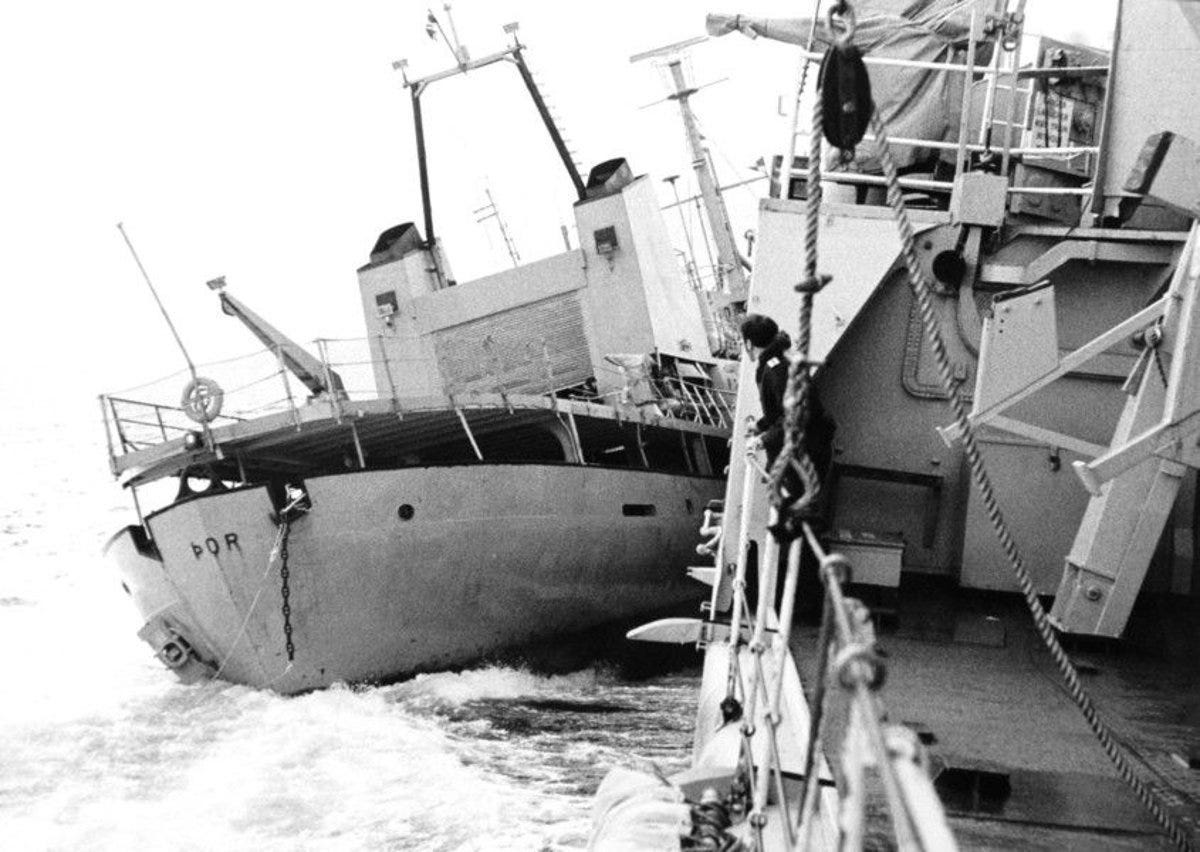
Which, more or less, brings us to the Cold War, when two NATO allies found themselves in conflict not over missiles, ideology or land borders, but over… a fish. Between 1958 and 1976, the United Kingdom and Iceland clashed in three successive crises that became known as the Cod Wars, or Þorskastríðin in Icelandic. They were also called Landhelgisstríðin (”the Territorial Waters Wars”), which admittedly sounds more dignified in diplomatic correspondence, but it’s the first name that stuck, and it’s the one that leaves no doubt whatsoever about what the fight was really about.
Viking stubbornness: a parliament founded in 930, a religion adopted by vote, and a streak of defiance that never quite went away.
Gunboat diplomacy: five centuries of British trawlers off Iceland, a limit set by the range of a cannon, and a treaty signed without asking the Icelanders.
The Three Cod wars: a Coast Guard of barely a hundred men against the Royal Navy, and the secret weapon that cut British trawlers loose.
Prisoners of geography: the stretch of sea Washington couldn’t afford to lose, and why Britain blinked first.
The Icesave War: a collapsed bank, and the day Icelanders told London and The Hague no, twice.
And finally, the original text in Greek.
Not ready to upgrade? You can still support the immense effort behind this newsletter for free by simply tapping the like button or restacking this post. Alternatively, you can always treat me to a frappé coffee:
Who you will be supporting:
