


“History worth reading. Stories worth remembering.”
Join 62,000+ readers enjoying deep historical dives. Support independent research, unlock full access to the Historiophiles Society, and choose the support tier that works best for you below.
For the first part read here:

Three goddesses, a shepherd, and a golden apple.
Paris, prince of Troy, grew up as a simple but handsome shepherd, unaware of his royal blood. When the goddesses Hera, Athena, and Aphrodite quarreled over which of them was “the fairest,” Zeus, unwilling to take sides, sent them to Mount Ida to be judged by the unsuspecting shepherd. Each goddess promised him something: Hera power and dominion, Athena wisdom and glory in war, and Aphrodite the most beautiful mortal woman in the world. Paris gave the apple to Aphrodite. The most beautiful woman was Helen, who, however, was already married to Menelaus in Sparta. And that is, more or less, how we ended up with the Trojan War.
Now you may ask: what does the Trojan War have to do with modern art?
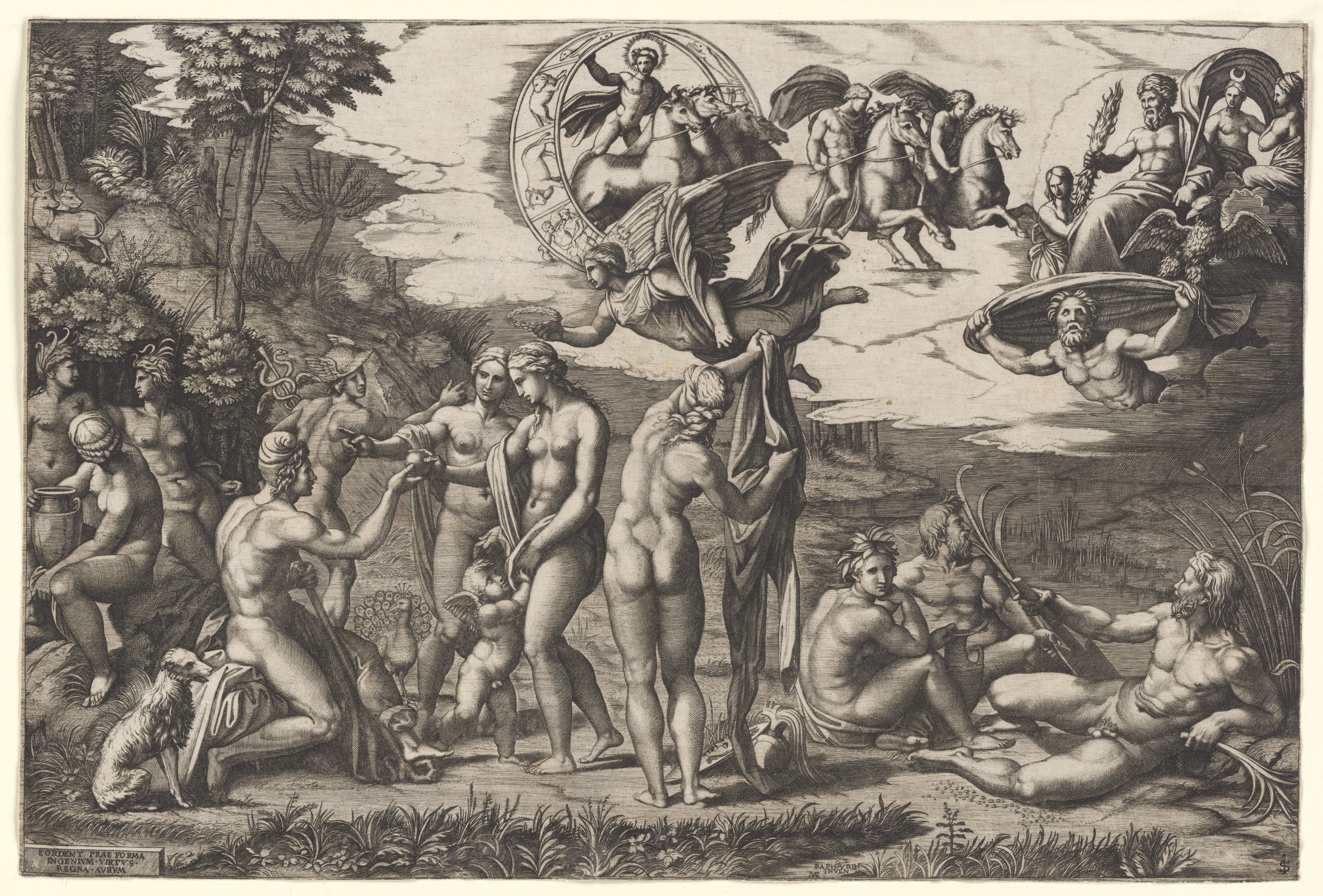
Around 1510, Raphael drew The Judgment of Paris. The drawing was lost, but not before the engraver Marcantonio Raimondi had copied it onto a copper plate. Three and a half centuries later, a well-dressed Parisian took three figures from the corner of that engraving, two river gods and a nymph, dressed the men in the clothes of his own day, left the woman naked, and sat them down to a picnic. Paris laughed at him. A hundred and sixty years later, that is where we begin modern art.
In the previous article we met the first links in the chain: a fugitive from Rome, a deaf court painter, a peasant from Ornans, a caricaturist in prison. The well-dressed gentleman I promised you, the one who watched Salon visitors attack his painting with umbrellas, was Édouard Manet. And everything leads to him.
What you’ll read next:
Chasing acceptance for a lifetime: from failing the Naval Academy exams to rejections at the Salon.
The Salon des Refusés: an emperor who let the public judge, and a naked woman between two gentlemen in jackets.
Olympia: the painting that needed guards to protect it from the public and the ghost of Aeschylus.
Madrid and Mexico: “the painter of painters,” The Third of May, and an emperor before a firing squad.
The Guerbois circle: the young painters who gathered around Manet in a Paris café and changed the course of art.
Impression, Sunrise: how a jibe in a satirical paper gave a new movement its name.
The Manet family secret: who was Édouard Manet’s brother-in-law, really?
A new era begins: why Manet’s artistic rebellion reshaped history, and why 19th-century Paris was the only place it could have happened.
Transforming history into these essays is a labor of love that takes many hours of research and writing. I know there are many demands on your resources, so I would be thrilled and honored to have your support at any level that feels comfortable to you.
Join the Historiophiles Society, read the final chapters, and help this archive grow by choosing your preferred tier (further discount available for annual subscriptions):
$4 per month ~ $3 per month ~ $2 per month
On iPhone? Subscribe in your browser at studyinghistory.gr to avoid Apple fees.
Not ready to upgrade? A like or restack helps other readers find Studying History. And if you would rather support one essay at a time, you can always treat me to a frappé coffee:
Who you will be supporting:
