


“History worth reading. Stories worth remembering.”
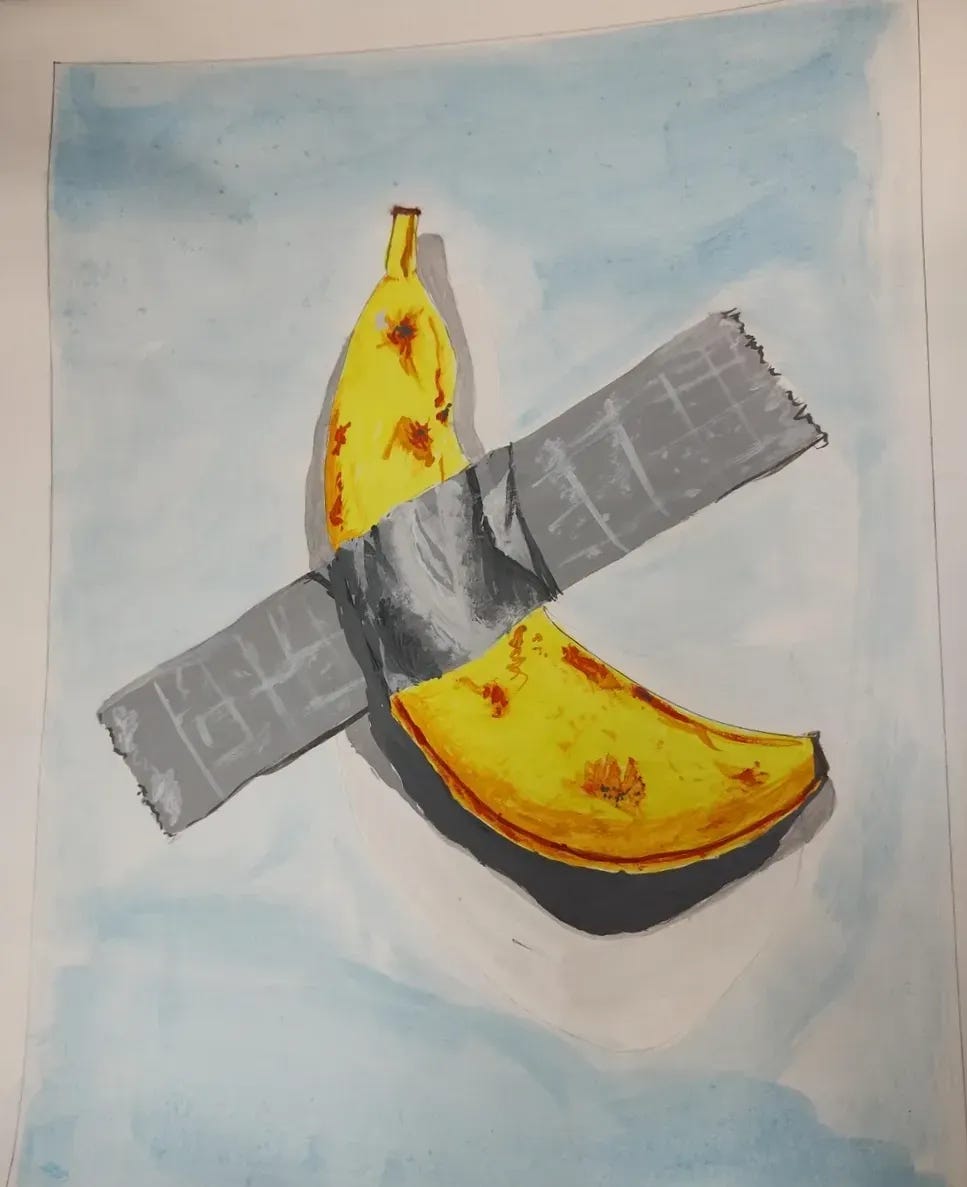
Anyone who has stood in front of a banana duct-taped to a gallery wall has probably wondered how on earth that counts as art. To answer the question we have to go back a long way: before the banana, before Picasso’s broken-up figures and Mondrian’s coloured squares. We have to travel to nineteenth-century Paris and meet a well-dressed bourgeois who hoped his painting would win him medals and the coveted approval of the Academy of Fine Arts, and who ended up watching visitors to the Salon attack his work with umbrellas.
(for the original text in Greek, scroll down)
The Genie Is Out of the Bottle
After Napoleon’s defeat, in September 1815, the monarchs of Russia, Austria and Prussia formed the Holy Alliance. Its language breathed Christian brotherhood, and it owed much to the ideas of Tsar Alexander I, who had at his side Ioannis Kapodistrias, later the first Governor of independent Greece. The Austrian chancellor Metternich called it a “loud-sounding nothing”, yet he made it the banner for crushing every liberal and national movement in the years that followed. The old regimes had put down the French Revolution, yet it had left behind a dangerous idea: that people have rights and that power must answer for itself. Once out, the idea could not be put back. It swept away conservative regimes and borders alike: Spain and Naples in 1820, Greece in 1821, Paris in 1830, and almost everywhere in 1848, the “Springtime of Nations”.
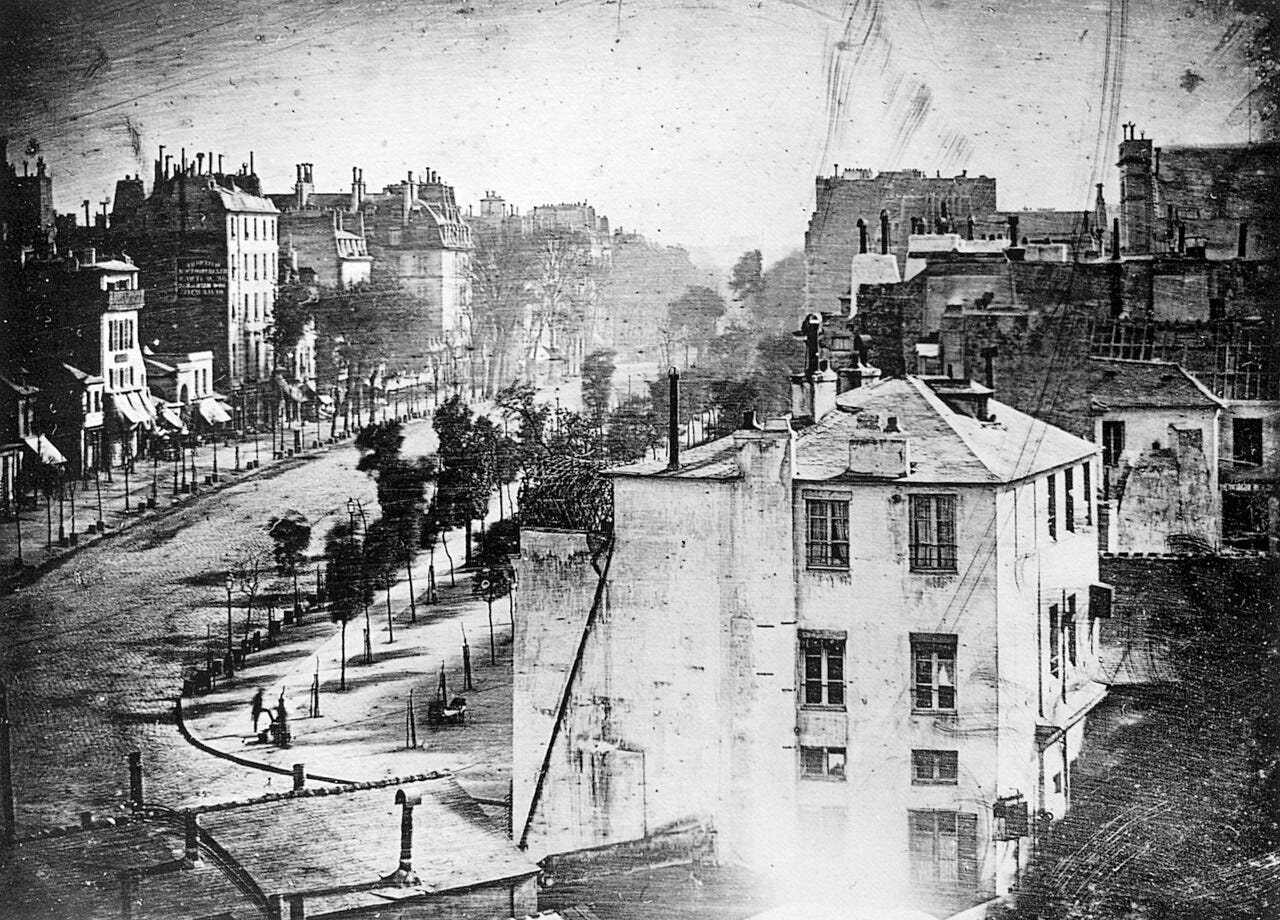
Meanwhile the Industrial Revolution was changing everyday life. The railway carried Parisians to the banks of the Seine in no time: the Grande Jatte, Argenteuil, Chatou, Bougival. They went there to swim, to row and to picnic, and later the heroes of our story would set up their easels there. From the late 1830s a machine could record reality faithfully: the camera. Quite a few miniature painters closed their studios and opened photographic ones. Early exposures took several minutes, so when Daguerre photographed a Paris boulevard from his window in 1838, the street came out empty. Carriages and passers-by moved through without leaving a trace. Yet this became the first photograph in history to show people: it caught a gentleman standing still while a bootblack polished his shoes.
In 1841 John Goffe Rand, an American painter living in London, patented the metal paint tube. Until then painters kept ready-mixed paint in pig’s bladders tied with string. To squeeze some out they pricked the bladder with a tack, and the hole never quite closed again. Renoir is supposed to have said that without paint tubes there would have been no Cézanne, no Monet and no Impressionism. An exaggeration? Perhaps. With a tube in his pocket, though, a painter could now walk out of his studio, if he wished, and turn nature itself into one vast studio. The Academy, of course, thought otherwise.
Read on to find out how we got from saints to bananas:
The rules of the game: gods at the top, fruit at the bottom, and a fly whispering in the viewer’s ear.
Saints and scandals: the Church’s orders to painters and a feast with too many guests.
A painter with a police record: artichokes, stones, and a Virgin the friars sent back.
What the Spanish Prime Minister kept out of sight: two paintings, a hidden pulley, and a summons from the Inquisition.
Enter, the Realists: a king turned into a pear, a man who refused to paint angels, and a painting a department store brought home.
For less than €4 a month, join the Historiophiles Society.
On iPhone? Subscribe in your browser at studyinghistory.gr for the lower price.
Not ready to upgrade? A like or restack helps other readers find Studying History. And if you would rather support one essay at a time, you can always treat me to a frappé coffee:
Who you will be supporting:

