


ακολουθεί κείμενο στα ελληνικά
Two weeks ago, an article I wrote about a film that has been smashing box office records in Greece since Christmas was published in Estia, the country’s oldest nationwide newspaper. I promised back then in Notes that I would publish it in English, but due to exams consuming all my time over the last few weeks, I haven’t been able to do so until today. Here is a little backstory for those who haven’t read my series of articles on modern Greek history, which culminate in the assassination of its first—and last—Governor:
Count Ioannis Kapodistrias was an internationally renowned diplomat who served, among other roles, as Foreign Minister of Russia, until his election by the insurgent Greeks in 1827 as the country’s first Governor. A country, of course, that did not yet exist and was in dire straits after six years of struggle against the Turks and two civil wars.
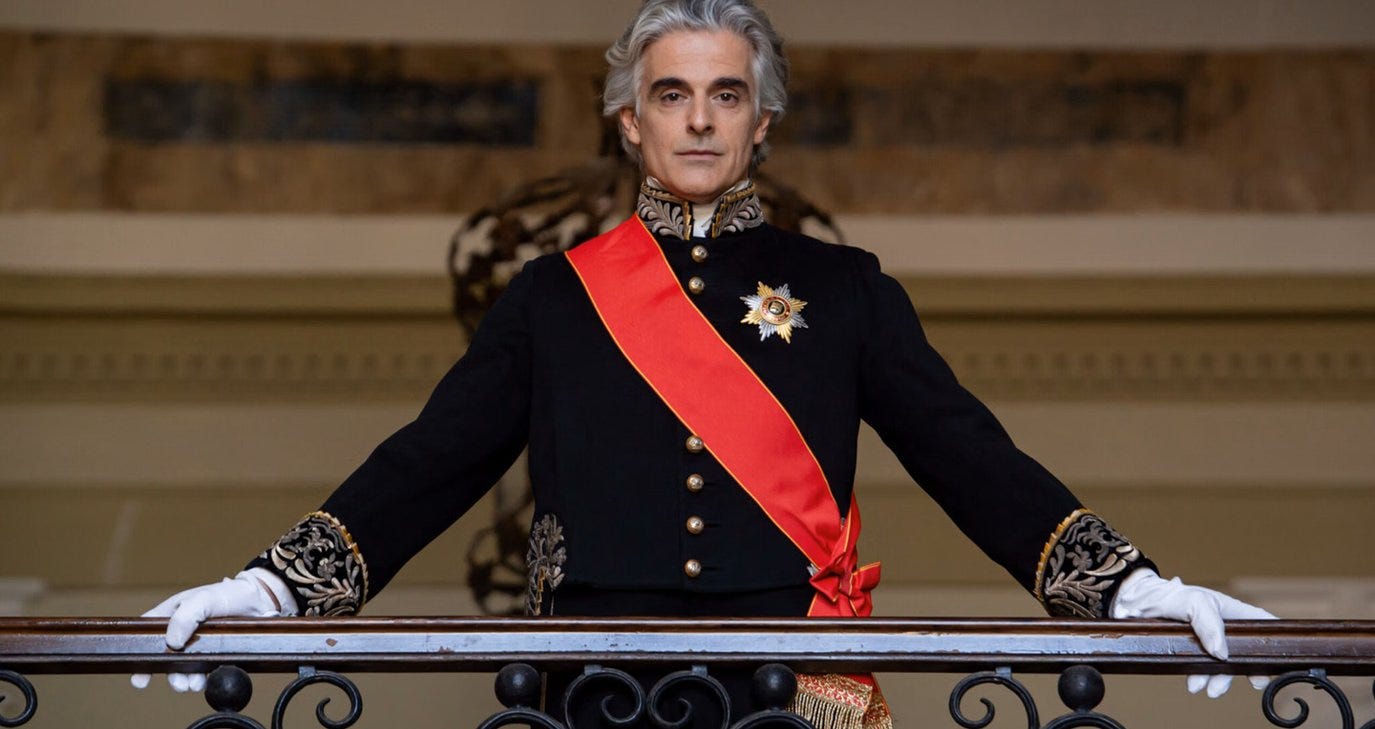
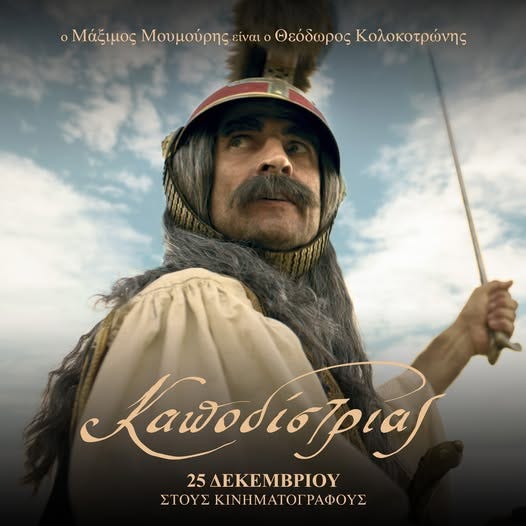
Yannis Smaragdis’s film is dedicated to this great noble patriot, but it has sparked a great deal of negative commentary. Despite its box office success, it is rife with historical inaccuracies and seems to be more an attempt to make a saint out of him—aiming to appeal to the patriotic and religious sentiments of the Greeks—than a genuine historical film. This, was the subject of my article.
“It has been over three weeks since its premiere, but Seneca said there is no better cure for anger than delay. And it seems that the “Kapodistrias” film genuinely provoked both angry reactions and commercial success. So, now that the dust has somewhat settled, perhaps it is the best time to talk about it.
In September 1831, the first Governor of Greece, this humble nobleman, was assassinated. Little could he have imagined that 195 years after his death, he would cause a National Schism. Because it is truly impressive how quickly we rush to pick sides on issues that occupy public opinion, and with what excessive zeal we defend our choice.
Like modern-day Robespierres, some rushed to send to the guillotine anyone who expressed a positive view of the film. In order to expose the obvious historical inaccuracies, they established an online Reign of Terror, nullifying almost any positive attribute Kapodistrias possessed as a man and a leader. Yet those who liked the movie are probably not nationalists, and neither are those who disliked it anti-Greek.
It is true that Kapodistrias did not found Switzerland, nor did he write its constitution. However, for his role in the struggle for the independence and stabilization of Switzerland, the addition of the canton of Geneva to the confederation, and the autonomy of the canton of Vaud, Kapodistrias received honorary distinctions, with the cities of Geneva and Lausanne naming him an Honorary Burgess (Bourgeois d’Honneur) and Honorary Citizen (Citoyen d’Honneur), respectively.
It is also true that he was not connected to the Filiki Eteria (Society of Friends) as implied in the film, nor with the preparation of the Revolution. But during the Congress of Vienna in 1815, he founded the Philomuse Society, with the aim of establishing schools in Greece, helping poor students, publishing classical authors, and ‘discovering antiquities of all kinds.’ In fact, he criticized the actions of the Filiki Eteria, as did many others, because he did not believe the Europe of the Holy Alliance was ready for an independent nation-state. He was a rationalist, and logic dictated that any such undertaking would be doomed. Yet Revolutions are not won with logic.
By 1827, the Revolution was breathing its last. Only a few areas of the Peloponnese and certain islands remained liberated from Ottoman rule. Yet, the Greeks had won simply by not losing. They had remained—albeit barely—alive until the moment the commitments of the Powers in Vienna 12 years prior were forgotten, and the climate shifted in their favor. It was Kapodistrias’s moment. He, however, had no relation to the democrat presented in the film, as he grew up in an environment where enlightened despotism was praised; no matter how heretical he was as an aristocrat, he remained a representative of the Ancien Régime.
His governance was undoubtedly authoritarian and centralized, and he openly expressed his deep disdain and mistrust toward the traditional leadership groups of the Struggle. The most revolutionary spirits, just weeks after his arrival, began to look back to classical times and speak of the virtue of tyrannicide—led notably by Anastasios Polyzoidis, a jurist and publisher of the newspaper Apollo in Hydra, who later presided over the court that tried Kolokotronis and found him innocent.
Kapodistrias answered his critics by saying, ‘"First, give bread to the hungry—then political rights.’ He did not indiscriminately embrace the ideas of the French Revolution and the progressive democratic principle of popular sovereignty, which had been enacted by the National Assembly that elected him Governor. The creation of a strong central authority from scratch required, at that time, centralized governance and the transfer of power from traditional local centers to the capital, something that provoked reactions.
Kolokotronis himself would later characteristically say: ‘(Kapodistrias) destroyed Greece because he wanted to make it Frankish (Western) immediately, whereas in the beginning, he should have made it three parts Frankish and seven Turkish, later half-and-half, and in the end, completely Frankish.’ On the eve of his assassination, he had made an enemy of almost every protagonist of the Revolution.
But why was he finally assassinated? The only certainty is that the British archives of the era are not classified. The other Great Powers certainly did not look kindly upon how close Russia was with Kapodistrias. Nevertheless, they had admitted that there was no one better to govern until the arrival of the foreign king, to whom Kapodistrias himself had agreed. It is most likely that the motives of the Mavromichalis family were much humbler than we think: A simple, traditional, Maniot vendetta. A crime of honor, regarding the undignified way—in their view—that Kapodistrias treated their clan and Petrobey specifically.
Some film critics and historians rushed to blame the uncultivated audience that cannot identify artistic and historical flaws and delights in metaphysical exaggerations and enlightened leaders. But who is to blame that the public does not know history? That they thirst for good cinema? Did some of those now wagging their fingers play a role in the devaluation of history education and the humanities, and the fact that while twenty years ago we were spoilt for choice, we now struggle to find even a handful of good movies each year?
Smaragdis himself, of course, unable to comprehend the negative reviews, recently stated that works of art must recall goodness, the positive element, not the negative. But art actually functions as a mirror of human experience. It heals by showing the negative as well, bringing about catharsis, and criticism—if we are open to it—makes us better.
Undoubtedly, Kapodistrias, through his work, his diplomatic actions, and his vision, laid the foundations for a stable, modern, European state. The first independent nation-state from the entrails of the Ottoman Empire, making the Greek Revolution the first liberal-national movement to succeed in the Old World of Europe. That is why the Franco-Swiss philhellene Eynard, whose bust we have erected in the National Garden, upon hearing of the assassination of the Governor and his friend, said that whoever murdered Kapodistrias murdered his homeland, and that his death was a pan-European misfortune.
Kapodistrias was not a saint, however, just as no protagonist of a significant historical period was a saint. Not Kolokotronis, not Trikoupis, not Venizelos, nor anyone else. The success of the movie showed that we have a need for films like this. Perhaps better films, with more inventive scripts and richer production values. Films that will start the conversation about historical periods and divisive events that haunt us and ultimately shape us.
Just as it showed that we have a need for leaders, but not for Messiahs. Leaders who will operate in a Europe now mature and democratically satiated—serving as a model to every corner of the world.”
Until the next stack, ἔρρωσθε καὶ εὐδαιμονεῖτε.
Whether it’s just the price of a single frappé coffee or a book, every contribution matters. Donations help cover research, writing, and the resources needed to keep sharing my passion for uncovering the past and bringing history, archaeology, and culture to life:
“Why does the word ‘Greece’ evoke such strong emotional resonance for most people in the West? For many, “Greece” is synonymous with “Ancient Greece,” the civilization that gave much of what defines the Western world today, or even with Byzantium, the Greek-speaking Roman Empire that serves as the vital link between ancient Greece and the modern nation-state forged after more than 400 years of Ottoman rule. But how did modern Greece become so closely connected to the legacy of the ancients, and how did it shape an identity that is both Greek and contemporary?”
Read the series of stacks on modern Greek history that culminated in Kapodistrias’ assassination, here.
ακολουθεί κείμενο στα ελληνικά
“Ο Σενέκας έχει πει ότι δεν υπάρχει καλύτερο φάρμακο για τον θυμό, από την αναβολή. Και φαίνεται πως στ’ αλήθεια η ταινία Καποδίστριας προκάλεσε τόσο θυμωμένες αντιδράσεις, όσο και εμπορική επιτυχία. Έτσι, τώρα που καταλάγιασε κάπως ο κουρνιαχτός, ίσως είναι η καλύτερη στιγμή να μιλήσουμε γι’ αυτή.
Τον Σεπτέμβριο του 1831, ο πρώτος Κυβερνήτης της Ελλάδας , ο ταπεινός αυτός ευπατρίδης, δολοφονήθηκε. Πού να φανταζόταν ότι 195 χρόνια μετά τον θάνατό του θα προκαλούσε έναν Εθνικό Διχασμό. Γιατί είναι πραγματικά εντυπωσιακό πόσο γρήγορα τρέχουμε να διαλέξουμε στρατόπεδο στα θέματα που απασχολούν την κοινή γνώμη και με τι υπέρμετρο ζήλο υπερασπιζόμαστε την επιλογή μας.
Ωσάν άλλοι Ροβεσπιέροι κάποιοι έσπευσαν να ρίξουν στη γκιλοτίνα όσους εκφράστηκαν θετικά για την ταινία. Προκειμένου να αποκαλύψουν τις εμφανείς ιστορικές ανακρίβειες εγκατέστησαν μια διαδικτυακή Τρομοκρατία, μηδενίζοντας σχεδόν τα όποια θετικά είχε ο Καποδίστριας σαν άνθρωπος και σαν ηγέτης. Μάλλον δεν είναι εθνικιστές όσοι τους άρεσε η ταινία, όμως, ούτε ανθέλληνες όσοι δεν τους άρεσε.
Είναι αλήθεια ότι ο Καποδίστριας δεν ίδρυσε την Ελβετία, ούτε έγραψε το σύνταγμά της. Ωστόσο για τον ρόλο του στον αγώνα για την ανεξαρτησία και τη σταθεροποίηση της Ελβετίας, την προσθήκη του καντονιού της Γενεύης σε αυτή και την αυτονομία του καντονιού του Βω, ο Καποδίστριας έλαβε τιμητικές διακρίσεις, με τις πόλεις της Γενεύης και της Λωζάνης να τον χρίζουν Δημότη επί Τιμής (Bourgeois d’Honneur) και Πολίτη επί Τιμής (Citoyen d’Honneur), αντίστοιχα.
Αλήθεια είναι και ότι δεν είχε σχέση με τη Φιλική Εταιρεία όπως υπονοήθηκε στην ταινία, ούτε με την προετοιμασία της Επανάστασης. Μα κατά την διάρκεια του Συνεδρίου της Βιέννης το 1815, ίδρυσε την Φιλόμουσο Εταιρεία, με σκοπό την ίδρυση σχολείων στην Ελλάδα, τη βοήθεια πτωχών μαθητών, την έκδοση κλασικών συγγραφέων και “δια την ανακάλυψιν παντός είδους αρχαιοτήτων”. Μάλιστα, κατέκρινε τη δράση της Φιλικής Εταιρείας, όπως πολλοί ακόμη, καθώς δεν πίστευε πως ήταν έτοιμη η Ευρώπη της Ιερής Συμμαχίας για ένα ανεξάρτητο έθνος-κράτος. Ήταν ορθολογιστής και η λογική υπαγόρευε πως οποιοδήποτε εγχείρημα θα ήταν καταδικασμένο. Οι Επαναστάσεις όμως δεν κερδίζονται με τη λογική.
Το 1827, πια, η Επανάσταση έπνεε τα λοίσθια. Μόνο λίγες περιοχές της Πελοποννήσου και ορισμένα νησιά παρέμεναν απελευθερωμένα από την Οθωμανική κυριαρχία. Οι Έλληνες όμως είχαν νικήσει, με το να μην χάσουν. Είχαν παραμείνει -έστω και μετά βίας- ζωντανοί μέχρι τη στιγμή που ξεχάστηκαν οι δεσμεύσεις των Δυνάμεων στη Βιέννη 12 χρόνια πριν και το κλίμα άλλαξε υπέρ τους. Ήταν η στιγμή του Καποδίστρια. Αυτός ωστόσο δεν είχε σχέση με τον δημοκράτη που παρουσιάζεται στην ταινία, μιας και μεγάλωσε σε ένα περιβάλλον όπου υμνούνταν η πεφωτισμένη δεσποτεία και όσο αιρετικός κι αν ήταν σαν αριστοκράτης, δεν έπαυε να είναι ένας εκπρόσωπος των Παλαιών Καθεστώτων.
Η διακυβέρνησή του υπήρξε αναμφισβήτητα αυταρχική και συγκεντρωτική, ενώ εξέφραζε ανοιχτά την βαθιά του απαξίωση και δυσπιστία απέναντι στις παραδοσιακές παραδοσιακές ηγετικές ομάδες του Αγώνα. Τα πιο επαναστατικά πνεύματα μόλις λίγες εβδομάδες μετά την άφιξή του, άρχισαν να κοιτάζουν πίσω στις κλασικές εποχές και να μιλούν για την αρετή της τυραννοκτονίας, προεξάρχοντος μάλιστα του νομικού και εκδότη της εφημερίδας Απόλλων στην Ύδρα, Αναστάσιου Πολυζωίδη, ο οποίος αργότερα προήδρευσε του δικαστηρίου που δίκασε τον Κολοκοτρώνη και τον έκρινε αθώο.
Ο Καποδίστριας απαντούσε στους επικριτές του λέγοντας «Πρώτα δίνεις ψωμί σε αυτόν που πεινάει και μετά πολιτικά δικαιώματα». Δεν ασπαζόταν αδιάκριτα τις ιδέες της Γαλλικής Επανάστασης και την προοδευτική δημοκρατική αρχή της λαϊκής κυριαρχίας, που είχε θεσπίσει η Εθνοσυνέλευση που τον είχε εκλέξει Κυβερνήτη. Η δημιουργία από το μηδέν μιας ισχυρής κεντρικής εξουσίας, απαιτούσε εκείνη την εποχή συγκεντρωτική διακυβέρνηση και μεταφορά εξουσίας από τα παραδοσιακά τοπικά κέντρα προς την πρωτεύουσα, κάτι που προκάλεσε αντιδράσεις.
Ο ίδιος ο Κολοκοτρώνης αργότερα θα έλεγε χαρακτηριστικά: «(Ο Καποδίστριας) κατέστρεψε την Ελλάδα επειδή ήθελε να την κάνει αμέσως φραγκική (δυτική), ενώ στην αρχή θα έπρεπε να την κάνει τρία μέρη φραγκική και επτά τουρκική, αργότερα μισή-μισή και στο τέλος τελείως φραγκική». Παραμονές της δολοφονίας του, είχε κάνει εχθρό του σχεδόν κάθε πρωταγωνιστή της Επανάστασης.
Γιατί δολοφονήθηκε όμως τελικά; Το μόνο σίγουρο είναι ότι τα βρετανικά αρχεία της εποχής δεν είναι απόρρητα. Οι άλλες Μεγάλες Δυνάμεις σίγουρα δεν έβλεπαν με καλό μάτι το πόσο κοντά ήταν η Ρωσία με τον Καποδίστρια. Παρόλα αυτά είχαν παραδεχθεί ότι δεν υπήρχε καλύτερος για να κυβερνήσει, μέχρι την άφιξη του ξενόφερτου βασιλιά, στον οποίο είχε συμφωνήσει και ο ίδιος ο Καποδίστριας. Το πιθανότερο είναι πως τα κίνητρα των Μαυρομιχαλαίων ήταν πολύ πιο ταπεινά απ’ όσο νομίζουμε: Μια απλή, παραδοσιακή, μανιάτικη βεντέτα. Ένα έγκλημα τιμής, για τον αναξιοπρεπή κατ’ αυτούς τρόπο με τον οποίο αντιμετώπισε ο Καποδίστριας τη φατρία τους και τον Πετρόμπεη συγκεκριμένα.
Κάποιοι κριτικοί κινηματογράφου και ιστορικοί, έσπευσαν να τα βάλουν με το απαίδευτο κοινό που δεν μπορεί να εντοπίσει τις καλλιτεχνικές και ιστορικές ατέλειες και αρέσκεται σε μεταφυσικές υπερβολές και πεφωτισμένους ηγέτες. Ποιος φταίει όμως που ο κόσμος δεν γνωρίζει ιστορία; Που διψάει για καλό σινεμά; Μήπως κάποιοι από αυτούς που κουνάνε τώρα το δάχτυλο έπαιξαν ρόλο στα να απαξιωθεί το μάθημα τις ιστορίας και οι ανθρωπιστικές σπουδές και στο γεγονός ότι ενώ μέχρι πριν 20 χρόνια δεν ξέραμε ποια ταινία να πρωτοδούμε, τώρα κάθε χρόνο μετράμε τις καλές ταινίες στα δάχτυλα του ενός χεριού;
Ο ίδιος ο Σμαραγδής, βέβαια, αδυνατώντας να κατανοήσει τις αρνητικές κριτικές, δήλωσε πρόσφατα ότι τα έργα τέχνης πρέπει να ανακαλούν την αγαθότητα, το θετικό στοιχείο, όχι το αρνητικό. Αλλά η τέχνη στην πραγματικότητα λειτουργεί ως καθρέφτης της ανθρώπινης εμπειρίας. Θεραπεύει δείχνοντας και τα αρνητικά, επιφέροντας την κάθαρση και η κριτική -αν είμαστε ανοιχτοί σε αυτή- μας κάνει καλύτερους.
Αναμφίβολα ο Καποδίστριας με το έργο του, τις διπλωματικές του ενέργειες και το όραμά του, έθεσε τις βάσεις για ένα σταθερό, σύγχρονο, ευρωπαϊκό κράτος. Το πρώτο ανεξάρτητο έθνος-κράτος από τα σπλάχνα της Οθωμανικής Αυτοκρατορίας, κάνοντας την Ελληνική Επανάσταση το πρώτο φιλελεύθερο-εθνικό κίνημα που πέτυχε στον Παλαιό Κόσμο της Ευρώπης. Γι’ αυτό και ο Γαλλο-Ελβετός φιλέλληνας Εϋνάρδος, προτομή του οποίου έχουμε ανεγείρει στον Εθνικό Κήπο, στο άκουσμα της δολοφονίας του Κυβερνήτη και φίλου του, είπε ότι όποιος δολοφόνησε τον Καποδίστρια, δολοφόνησε την πατρίδα του και πως ο θάνατός του είναι δυστύχημα πανευρωπαϊκό.
Δεν ήταν άγιος όμως ο Καποδίστριας, όπως δεν ήταν άγιος και κανένας πρωταγωνιστής σημαντικής ιστορικής περιόδου. Ούτε ο Κολοκοτρώνης, ούτε ο Τρικούπης, ούτε ο Βενιζέλος, ούτε κανένας άλλος. Η επιτυχία της ταινίας έδειξε ότι έχουμε ανάγκη από ταινίες σαν κι αυτή. Καλύτερες ίσως ταινίες, με ευρηματικότερο σενάριο και πλουσιότερη παραγωγή. Ταινίες που θα ξεκινούν τη συζήτηση για ιστορικές περιόδους και διχαστικά γεγονότα που μας στοιχειώνουν και τελικά μας διαμορφώνουν. Όπως έδειξε και ότι έχουμε ανάγκη από ηγέτες, μα όχι από Μεσσίες. Ηγέτες που θα λειτουργούν σε μια ώριμη και δημοκρατικά χορτασμένη πια Ευρώπη, που αποτελεί πρότυπο σε όλα τα μήκη και τα πλάτη του κόσμου.”
Whether it’s just the price of a single frappé coffee or a book, every contribution matters. Donations help cover research, writing, and the resources needed to keep sharing my passion for uncovering the past and bringing history, archaeology, and culture to life:
Read the series of stacks on modern Greek history that culminated in Kapodistrias’ assassination, here.