


First of all, I must thank the six Substackers who took advantage of last weekend’s offer and paid 50% less for an annual subscription. I owe special thanks to Mrs Susan R., because she didn’t just buy me a Frappé coffee, she bought me a whole book. But most importantly, with her wonderful message she warmed my heart.
For the original text in Greek, scroll down.
Know that I do not take these gestures of yours lightly. Your kind words and support—not only for me but for all those who pour their souls into Substack writing about things they thought would interest only themselves—fill us with joy and make us want to evolve what we do into something perhaps more professional in the future, something that wouldn’t even cross our minds before we discovered the Substack community. So, if you have the ability, prefer small and independent writers you’ve incorporated into your daily routine over multimillionaire journalists, big news agencies and conspiracy theorists/toxic human beings, and I guarantee you won’t lose out.
That being said, allow me to note that I greatly enjoy the dialogue and exchange of views in the comments under my Notes. I learn a great deal from you, and I’m pleased that in most cases your comments are polite and highly informative. True to my tradition of leaving a half-finished stack draft I was preparing about the Pope’s visit to the Middle East to start something completely unrelated that momentarily inspired me, I’ve decided to write about something I was inspired by from your comments.
I’ve stated in the past that out of the hundreds of draft topics I have saved, very few manage to become a separate stack, which is why I often present them in their shortest version in Notes.
The day before yesterday, I made a Note about Winston Churchill’s birthday:
Because, among other things, my Note was considered an attempt to make a saint out of Churchill, although he was anything but a saint, and in the effort to support this view, I was reminded that in the first elections after World War II in 1945, the British people voted him out of office.
But which of the historical figures we truly consider great were saints anyway? Is it fair to judge someone who lived 70, 700, or 1,700 years ago by the standards we have today? Does the fact that a majority decides something at a given time necessarily mean that it is best for everyone?

These are indeed some interesting questions that made me recall at first the case of Eleftherios Venizelos. We’ll deal with his case in more detail later, in the context of my paywalled articles on modern Greek history, when I decide to write again about something I’ve studied in depth and that will bring me paid subscribers, rather than something that momentarily inspired me. But, alas, that might never happen, so in short, he was the man who shaped Greece’s fate in the first half of the 20th century, if not the entire century, through his politics. Under his premiership, after the end of the First and Second Balkan Wars and World War I, Greece tripled in size, reaching almost the revival of the Byzantine Empire by August 1920 with the Treaty of Sèvres, the so-called “Greece of the Two Continents and Five Seas.”
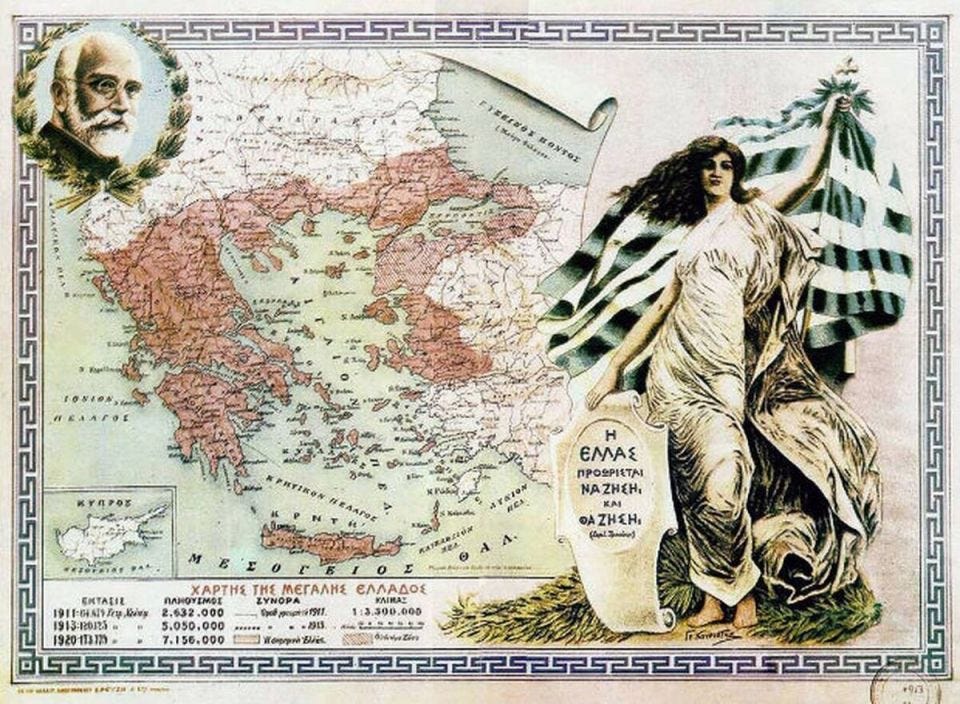
However, just two months later, in November 1920, Venizelos not only lost the elections but wasn’t even elected as a Member of Parliament. The new government brought back King Constantine, who had been exiled by Venizelos with the support of the Great Powers, as he was considered pro-German in previous years. This resulted in Greece losing their support during the Asia Minor Campaign, and ultimately in 1922 being crushed by the neo-Turkish forces led by Kemal (“Young Ottomans” - Yeni Osmanlılar). Thus ended the so-called Great Idea for the Greeks—but as I said, that’s a story for a separate stack.
The story of the great but defeated Venizelos and Churchill reminded me of yet another great figure. And not just great, but Just, as that was his epithet among his fellow citizens. Such was his character and integrity.
So let’s go back two and a half millennia, to the time of the birth of Democracy. Specifically, twenty-six years after the establishment of a political system that for the first time in the history, gave the political power in the hands of the many (or at least, more than before). Despite perhaps the self-interested motives of its founder, Cleisthenes, who in 508 BC laid the foundations for Athens’ democratic reform, or the many implementation problems with stubborn and ambitious aristocrats as well as irresponsible citizens, the noble motive of fighting for ideas, values, and freedom had already borne fruit by 490 BC at Marathon, where free Athenian citizens defeated the Persian soldiers of the Great King Darius, defending their homeland.
And while a few years later Cleisthenes had already been forgotten by the chronically ungrateful Athenian people, who were preparing for the second Persian invasion, Aristides was quarreling with Themistocles over whether they should prioritize land forces and hoplites (Aristides) or the sea and triremes (Themistocles).
The new Persian King Xerxes remembered how his father Darius always had a servant whispering in his ear after Marathon: “Master, do not forget the Athenians,” ever since the latter had aided the Greek-Ionians in their revolt against him by setting fire to Sardis in Asia Minor. Nor had Xerxes forgotten, and so alongside the hundreds of thousands of Persians, Medes, and other soldiers, there was also a mighty fleet of Phoenicians, Ionians, and others that the Greek alliance of city-states would have to face once again.
That’s why Themistocles was trying to convince his fellow citizens that if they wanted any chance in the war against the Persians, they needed to spend the new vein of silver discovered at Lavrio, just outside Athens, not on infantry but on a navy—a completely unheard-of idea in the era of the all-powerful hoplite phalanx.
Aristides, an old-school aristocrat who nonetheless enjoyed universal respect for his integrity, philanthropy, and sponsorship of theatrical performances—he even bore the epithet “the Just”—believed the money should be spent on infantry, which had after all made them proud just a few years earlier at Marathon.
But since the scales in the Assembly of the People (Ecclesia of Demos) didn’t tip in favor of either side’s arguments and the Persian hordes were drawing near, it was decided to hold a vote using the method of ostracism (negative vote, for those who only understand reality TV terms). Whoever was ostracized would be exiled from Athens for ten years, leaving the other to implement his policy.
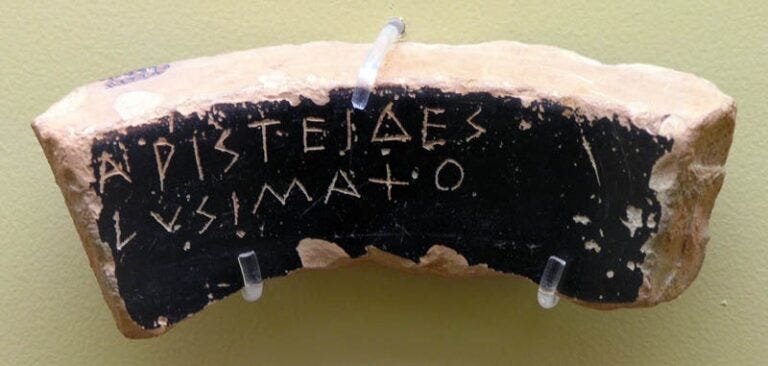
The voting had begun, and as Aristides the Just stood with his associates in front of the voting booths, an illiterate old man approached him holding an ostracon and, without knowing whom he was addressing, handed it to him with the request to write the name “Aristides” on it! Stunned, Aristides asked the old man why he wanted Aristides ostracized, an he replied:
“Because I’m tired of everyone constantly calling him Just!”
A rather didactic story, if nothing else, that tells us excess is harmful, and that voters don’t always approach the polls with the best of intentions.
Of course, we all know how the story ended. Fortunately, the old man’s vote, though for the wrong reasons, made the difference. Athens built the strongest navy of the era. The Persians did invade Greek territory again, defeated the Spartans at Thermopylae, burned Athens and the old Parthenon, but lost the naval battle at Salamis and the battle at Plataea.
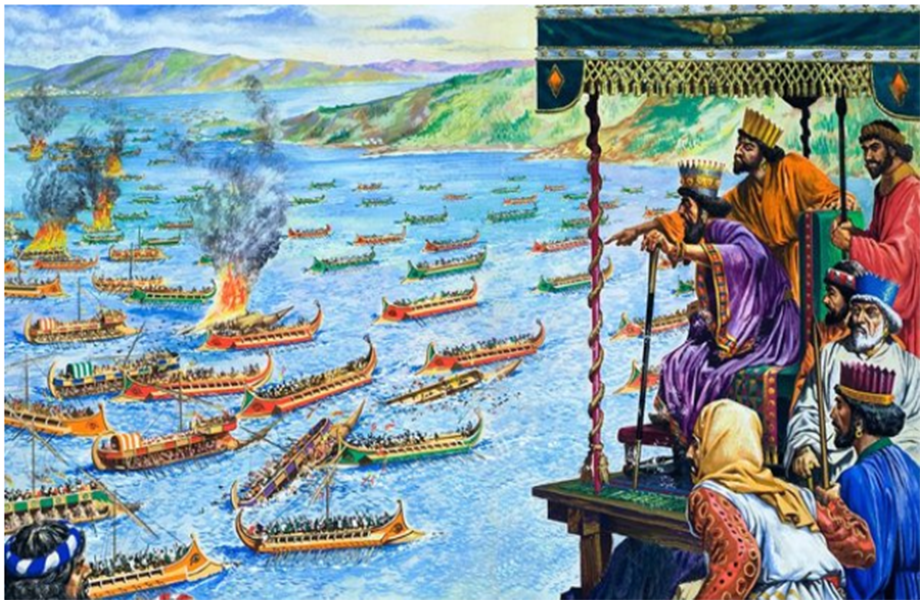
From that moment on, the Persians were always on the defensive, with the Athenians creating their thalassocracy and Pericles’ Golden Age, until Alexander the Great, ultimately, with his “marvelous Panhellenic campaign” 150 years later, overthrew the Persian Empire and created “the great new Hellenic world.” And of course, the Athenians, a few years after Aristides (whom they recalled earlier than expected), ostracized Themistocles (who went on to become a satrap in Persia!), Kimon, Pericles’ father, and others.
As for the quirks and various mishaps of democracy, the—far from a saint—Winston Churchill put it best, as usual:
“Democracy is the worst form of government except for all the others that have been tried.”
So he might have answered the question in the title with something like “do swallows migrate to Africa in the winter?”
Until the next stack, ἔρρωσθε καὶ εὐδαιμονεῖτε.
Whether it’s just the price of a single frappé coffee or a book, every contribution matters. Donations help cover research, writing, and the resources needed to keep sharing my passion for uncovering the past and bringing history, archaeology, and culture to life:
Ακολουθεί κείμενο στα ελληνικά
Είναι η Δημοκρατία στ’ αλήθεια το καλύτερο πολιτικό σύστημα;
Oι ιδιαίτερες περιπτώσεις των Τσόρτσιλ, Βενιζέλου και Αριστείδη του Δίκαιου
Κατ’ αρχάς, οφείλω να ευχαριστήσω τους έξι Substackers που εκμεταλλεύτηκαν την προσφορά του προηγούμενου Σαββατοκύριακου και πλήρωσαν 50% λιγότερα χρήματα για μια ετήσια συνδρομή. Ξεχωριστές ευχαριστίες οφείλω στην κυρία Susan R. γιατί δεν μου αγόρασε απλά έναν Frappé coffee, αλλά ένα βιβλίο. Μα το σημαντικότερο είναι ότι με το υπέροχο μήνυμά της μου ζέστανε την καρδιά.
Να ξέρετε ότι αυτές τις χειρονομίες σας δεν τις παίρνω ελαφρά τη καρδία. Τα καλά σας λόγια και η στήριξή σας, όχι μόνο σε μένα αλλά και σε όσους βγάζουν την ψυχή τους εδώ στο Substack γράφοντας για πράγματα που πίστευαν ότι θα ενδιέφεραν μόνο τους ίδιους, μας γεμίζουν με χαρά και μας κάνουν να θέλουμε να εξελίξουμε αυτό που κάνουμε σε κάτι ίσως πιο επαγγελματικό στο μέλλον, κάτι που ούτε θα περνούσε από το μυαλό μας πριν γνωρίσουμε την κοινότητα του Substack. Όσοι έχετε τη δυνατότητα λοιπόν, προτιμήστε μικρούς και ανεξάρτητους συγγραφείς που έχετε βάλει στην καθημερινότητά σας, από πολυεκατομμυριούχους δημοσιογράφους και μεγάλα ειδησεογραφικά μέσα και σας το εγγυώμαι ότι δεν θα χάσετε.
Αφού είπαμε αυτά που έπρεπε να ειπωθούν, να πω ότι απολαμβάνω πάρα πολύ τον διάλογο και την ανταλλαγή απόψεων στα σχόλια κάτω από τα Notes μου. Μαθαίνω πάρα πολλά από εσάς και χαίρομαι που στην πλειοψηφία των περιπτώσεων τα σχόλιά σας είναι κόσμια και άκρως ενημερωτικά. Έτσι λοιπόν, πιστός στην παράδοσή μου να αφήνω στη μέση ένα προσχέδιο stack που ετοίμαζα για την επίσκεψη του Πάπα στη Μέση Ανατολή και να ξεκινάω κάτι παντελώς άσχετο που με ενέπνευσε προς στιγμήν, αποφάσισα να γράψω για κάτι που εμπνεύστηκα από τα σχόλιά σας.
Έχω δηλώσει στο παρελθόν ότι από τα εκατοντάδες προσχέδια θεμάτων που έχω αποθηκευμένα, ελάχιστα καταφέρνουν να γίνουν ένα ξεχωριστό stack, γι’ αυτό και πολλές φορές τα παρουσιάζω στην πιο σύντομη εκδοχή τους στα Notes.
Προχθές λοιπόν, έκανα ένα Note για τα γενέθλια του Γουίντσον Τσόρτσιλ:
Επειδή μεταξύ άλλων, το Note μου θεωρήθηκε μια προσπάθεια αγιοποίησης του Τσόρτσιλ, ενώ ο ίδιος κάθε άλλο παρά άγιος ήταν και στην προσπάθεια να στηριχθεί αυτή η άποψη, μου υπενθυμίστηκε ότι στις πρώτες εκλογές μετά τον Β΄Π.Π. ο βρετανικός λαός του έδειξε την πόρτα της εξόδου.
Ποια όμως από τα ιστορικά πρόσωπα που θεωρούμε πραγματικά σπουδαία ήταν άγιοι; Είναι δίκαιο να κρίνεται κάποιος που έζησε πριν από 70, 700, 1.700 χρόνια, με τα δεδομένα που έχουμε στη διάθεσή μας σήμερα; Το γεγονός ότι αποφασίζει κάτι μία πλειοψηφία μία δεδομένη χρονική στιγμή, σημαίνει και ότι αυτό είναι και το καλύτερο για όλους;
Αυτή είναι μια ενδιαφέρουσα συζήτηση, η οποία με έκανε να θυμηθώ την περίπτωση αρχικά του Ελευθερίου Βενιζέλου. Θα ασχοληθούμε αναλυτικότερα με την περίπτωσή του αργότερα, στα πλαίσια των άρθρων μου με paywall σχετικά με τη νεότερη ελληνική ιστορία, όταν αποφασίσω να γράψω για κάτι που έχω ξεκινήσει να το μελετάω διεξοδικά που θα μου φέρει paid subscribers και όχι για κάτι που με ενέπνευσε στιγμιαία, αλλά εν συντομία να πω ότι ήταν ο άνθρωπος που καθόρισε με την πολιτική του την τύχη της Ελλάδας το πρώτο μισό του 20ού αιώνα, αν όχι και ολόκληρου. Υπό την πρωθυπουργία του και μετά το πέρας των Α΄ & Β΄ Βαλκανικών Πολέμων αλλά και του Α΄ Π.Π. η Ελλάδα τριπλασιάστηκε, για να φτάσει τον Αύγουστο του 1920 με τη Συνθήκη των Σεβρών σχεδόν να αναβιωθεί η Βυζαντινή Αυτοκρατορία με την “Ελλάδα των δύο Ηπείρων και των πέντε θαλασσών”.
Όμως μόλις δύο μήνες μετά, τον Νοέμβριο του 1920, ο Βενιζέλος όχι μόνο έχασε τις εκλογές, αλλά δεν εκλέχθηκε καν Βουλευτής. Η νέα Κυβέρνηση έφερε πίσω τον Βασιλιά Κωνσταντίνο ο οποίος είχε εκδιωχθεί από τον Βενιζέλο με τη στήριξη των Μεγάλων Δυνάμεων καθώς θεωρούνταν τα προηγούμενα χρόνια γερμανόφιλος, με αποτέλεσμα να χάσει τη στήριξή τους στην Μικρασιατική Εκστρατεία και τελικά το 1922 να συντριβεί από τις δυνάμεις των νεότουρκων με επικεφαλής τον Κεμάλ. Έτσι τελείωσε η λεγόμενη Μεγάλη Ιδέα για τους Έλληνες, αλλά όπως είπα αυτό είναι μία ιστορία για ένα ξεχωριστό stack.
Η ιστορία των σπουδαίων αλλά ηττημένων Βενιζέλου και Τσόρτσιλ, μου θύμισε έναν άλλο σπουδαίο. Και μάλιστα όχι απλώς σπουδαίο, αλλά Δίκαιο, καθώς αυτό ήταν το προσωνύμιό του από τους συμπατριώτες του. Τέτοιο ήταν το ήθος και η αξία του.
Πάμε λοιπόν δυόμισι χιλιετίες πίσω, την εποχή της γέννησης της Δημοκρατίας. Και συγκεκριμένα είκοσι έξι χρόνια μετά την καθιέρωση ενός πολιτεύματος που για πρώτη φορά στον κόσμο, η εξουσία βρίσκονταν στα χέρια των πολλών (ή τέλος πάντων, των περισσότερων από πριν). Παρά λοιπόν τα ιδιοτελή ίσως κίνητρα του εμπνευστή της Δημοκρατίας, Κλεισθένη, ο οποίος το 508 π.Χ. έθεσε τις βάσεις για τη δημοκρατική μεταρρύθμιση της Αθήνας ή τα τόσα προβλήματα εφαρμογής της σε πεισματάρηδες και φιλόδοξους αριστοκράτες αλλά και ανεύθυνους πολίτες, το ευγενές κίνητρο του να μάχεται κανείς για ιδέες, αξίες και ελευθερία, είχε αποδώσει ήδη το 490 π.Χ. στον Μαραθώνα, με τους ελεύθερους Αθηναίους πολίτες να νικούν τους Πέρσες στρατιώτες του Μεγάλου Βασιλιά Δαρείου, υπερασπιζόμενοι την πατρίδα τους.
Και ενώ λίγα χρόνια μετά ο Κλεισθένης είχε ήδη ξεχαστεί από τον διαχρονικά αχάριστο αθηναϊκό λαό, ο οποίος προετοιμάζονταν για τη δεύτερη περσική εισβολή, ο Αριστείδης φιλονικούσε με το Θεμιστοκλή για το αν θα πρέπει να δώσουν το βάρος στη στεριά και τους οπλίτες (Αριστείδης) ή τη θάλασσα και τις τριήρεις (Θεμιστοκλής).
Ο Ξέρξης θυμόταν πως ο πατέρας του Δαρείος, είχε πάντα δίπλα του μετά τον Μαραθώνα έναν υπηρέτη να του ψιθυρίζει στο αυτί: “Δέσποτα, μη λησμονείς τους Αθηναίους”, από τότε που οι τελευταίοι συνέδραμαν τους Ίωνες, στα πλαίσια της επανάστασής τους, να πυρπολήσουν τις Σάρδεις. Ούτε ο Ξέρξης είχε ξεχάσει και γι’ αυτό μαζί με τις εκατοντάδες χιλιάδες των Περσών, Μηδών και λοιπών στρατιωτών, υπήρχε και ένας πανίσχυρος στόλος Φοινίκων, Ιώνων, Αιγυπτίων και άλλων, που ο συνασπισμός των Ελλήνων θα καλούνταν να αντιμετωπίσει εκ νέου.
Γι’ αυτό και ο Θεμιστοκλής, προσπαθούσε να πείσει τους συμπολίτες του, πως αν θέλουν να έχουν αξιώσεις στον πόλεμο εναντίων των Περσών, έπρεπε να ξοδέψουν τη νέα φλέβα ασημιού που είχε βρεθεί στο Λαύριο, λίγο έξω από την Αθήνα, όχι σε πεζικό, αλλά σε ναυτικό, πράγμα πρωτάκουστο την εποχή της πανίσχυρης οπλιτικής φάλαγγας.
Ο Αριστείδης, παλαιάς κοπής αριστοκράτης, που όμως έχαιρε της εκτίμησης όλων για την εντιμότητά του, τις φιλανθρωπίες του και τις χορηγίες θεατρικών παραστάσεων -έφερε μάλιστα το προσωνύμιο “ο Δίκαιος”- πίστευε πως τα χρήματα έπρεπε να τα ξοδέψουν στο πεζικό, που τους έβγαλε άλλωστε ασπροπρόσωπους πριν λίγα χρόνια στον Μαραθώνα.
Επειδή η πλάστιγγα όμως, δεν έγερνε στην Εκκλησία του Δήμου, ούτε υπέρ των επιχειρημάτων του ενός, ούτε του άλλου και οι ορδές των Περσών κοντοζυγώναν, αποφασίστηκε να γίνει δημοψήφισμα, με τη μέθοδο του εξοστρακισμού (αρνητική ψήφος, για όσους καταλαβαίνουν μόνο όρους reality). Όποιος εξοστρακίζονταν, θα εξορίζονταν για δέκα χρόνια από την Αθήνα και θα άφηνε τον άλλο να εφαρμόσει την πολιτική του.
Έχει ξεκινήσει λοιπόν η ψηφοφορία και ενόσω ο Αριστείδης με τους συνεργάτες του, στεκόταν πριν τα εκλογικά παραπήγματα, κάποιος αναλφάβητος παππούς τον πλησίασε, κρατώντας μια κεραμίδα και χωρίς να γνωρίζει σε ποιον απευθύνεται, του την έδωσε με την παράκληση να γράψει πάνω της το όνομα “Αριστείδης” ! Αποσβολωμένος, ο Αριστείδης ζήτησε από τον παππού να μάθει το λόγο που αυτός θέλει να εξοστρακιστεί ο Αριστείδης και αυτός του απάντησε :
“γιατί βαρέθηκα συνέχεια που τον φωνάζουνε δίκαιο και δίκαιο!“
Μία, αν μη τι άλλο, διδακτική ιστορία, που μας λέει ότι η υπερβολή βλάπτει, μα και ότι οι ψηφοφόροι δεν προσέρχονται πάντα στις κάλπεις έχοντας τις καλύτερες των διαθέσεων.
Φυσικά όλοι γνωρίζουμε πως κατέληξε η ιστορία. Ευτυχώς η ψήφος του παππού , αν και για λάθος λόγους, έκανε τη διαφορά. Η Αθήνα δημιούργησε το ισχυρότερο ναυτικό της εποχής. Οι Πέρσες ξαναεισέβαλαν στον ελλαδικό χώρο, νίκησαν τους Σπαρτιάτες στις Θερμοπύλες, έκαψαν την Αθήνα και τον Παρθενώνα, αλλά έχασαν στη ναυμαχία της Σαλαμίνας και στη μάχη των Πλαταιών. Από εκείνη τη στιγμή και μετά θα ήταν πάντα αμυνόμενοι, με τους Αθηναίους να δημιουργούν τη θαλασσοκρατορία τους και τον Χρυσούν Αιώνα του Περικλή, μέχρι ο Αλέξανδρος ο Μέγας, τελικά, με την “θαυμάσια πανελλήνιαν εκστρατεία” 150 χρόνια μετά, να καταλύσει την περσική αυτοκρατορία και να δημιουργήσει έναν “ελληνικό καινούριο κόσμο, μέγα”. Και φυσικά, οι Αθηναίοι λίγα χρόνια μετά τον Αριστείδη (που τον κάλεσαν όμως πίσω νωρίτερα), εξοστράκισαν και τον Θεμιστοκλή (που πήγε και έγινε σατράπης στην Περσία!) και τον Κίμωνα και τον πατέρα του Περικλή κ.α.
Όσον αφορά δε στα τερτίπια και τις διάφορες αναποδιές της Δημοκρατίας, ο -κάθε άλλο παρά άγιος- Γουίνστον Τσόρτσιλ τα έχει πει καλύτερα απ’ όλους, ως συνήθως: “democracy is the worst form of government except for all the others that have been tried.“
Discussions about 'democracy' often founder on the reefs of abstraction. Modern governments are too complex for simple abstractions like 'democracy'.
Take the United States where aspects of governance are 'democratic', others not so much.
One of the aspects of governance that Americans are most proud of include the preeminence of the first ten amendments to the Constitution that take certain activities outside of democratic action.
Moreover, those amendments, like the rest of the Constitution, are interpreted by Supreme Court that is totally outside the realm of democratic governance.
A more mundane example involves our regulatory agencies (executive branch or independent). They develop policies with only general direction from the democratically elected Congress. None of the leaders or staff of these agencies are democratically selected.
And we continue to elect our presidents through an archaic institution that values States over the actual popular vote.
Kingdom from God is the best!!