


ακολουθεί κείμενο στα ελληνικά
The Berlin Wall fell on November 9, 1989, but much earlier it had secretly fallen for just one night. And it was a song that brought it down.
for uncovering the past and bringing history, archaeology, and culture to life.
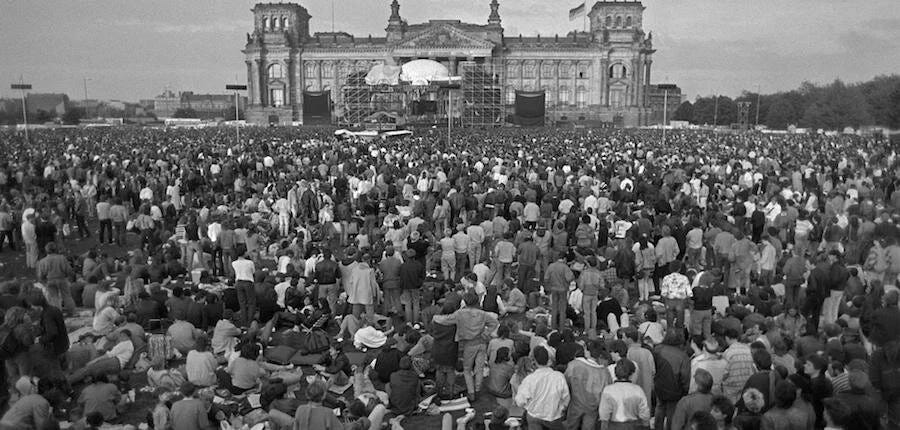
It was “Heroes,” about two lovers separated by History, and while today the lyrics might sound somewhat poignantly hopeful, at the time their literal meaning left no room for anything but becoming an anthem for Freedom.
It was June 1987.
Almost 10 years after his legendary Berlin Years, David Bowie gave a concert in West Berlin, in front of the Reichstag and just a breath away from the Wall. Before playing “Heroes,” he addressed those behind the iron curtain. It’s said Bowie requested the sound system be deliberately pointed toward East Berlin. No one could stop the music from reaching the people, and thousands of East Germans who had gathered illegally on the other side chanted slogans demanding the Wall fall and for Gorbachev to free them. Clashes and arrests followed, but it was one of the first times the atmosphere seemed to be changing. A week later, Reagan would visit and deliver his historic speech at the Brandenburg Gate with the words “Mr. Gorbachev, tear down this wall!”
The rest is history, but many years later Bowie said in an interview that it was the most emotionally charged concert he ever gave and that he cried hearing the people on the other side singing with him and cheering as if nothing separated them anymore.
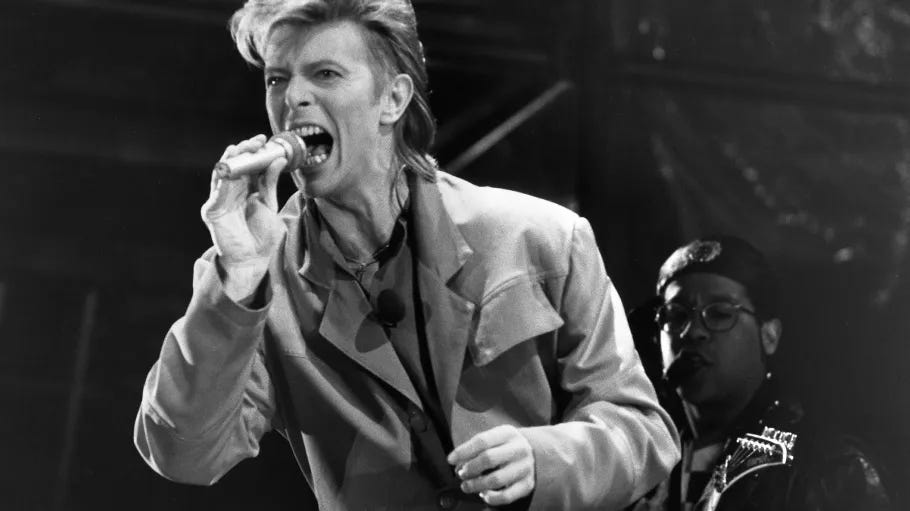
In 2016, on the day of Bowie’s death, Germany’s Foreign Ministry bid him farewell, thanking him for his contribution to the Wall’s fall, calling him a hero as well.
David Bowie’s landmark performance in the divided city shook the occupants to their emotional core, making him a hero to generations of Berliners. And even if, from a historical standpoint, that concert didn’t directly determine the events that followed, and even if in reality “Heroes” never actually brought down the Berlin Wall, for one night it managed to unite two such distant worlds exactly as the lyrics had foretold:
We can be heroes just for one day!
How did the wall actually fall like a ripe fruit: The peaceful revolution
Two years and 4 months after Bowie’s Glass Spider Tour, on October 7-8, 1989, Gorbachev visited East Berlin for official celebratory events. During the parade on Unter den Linden Avenue, thousands of East Germans cheered him, shouting “Gorbi, help us! Gorbi, stay here!” while opposition protests continued in the following days.
Honecker hesitated about whether to order the security forces to intervene and, having no support from Moscow, resigned on October 18.
His successor, Egon Krenz, opposed repression of the demonstrations and assured Gorbachev that despite difficulties, he would endure. Returning from Moscow, Krenz decided to relax the travel restrictions to the West (without abolishing them), in an effort to ease tensions.
The hastily prepared decree was given to Günter Schabowski, a member of the Politburo, who was not at the meeting but was preparing to inform journalists. Schabowski glanced hurriedly at it and then announced that the citizens of the GDR were free to leave “from any border crossing point.” The surprised journalists asked when the new regulations would take effect.
Searching unsuccessfully for the papers, Schabowski replied, “According to my information, from this moment.” Did the regulations also apply to travel to West Berlin? Schabowski looked at his papers again, shrugged his shoulders, shuffled some papers, and answered, “Permanent exit may take place through all borders from the GDR to West Germany and to West Berlin respectively.” The next question was: “What is going to happen now with the Berlin Wall?” Schabowski mumbled an incomprehensible answer and ended the press conference.
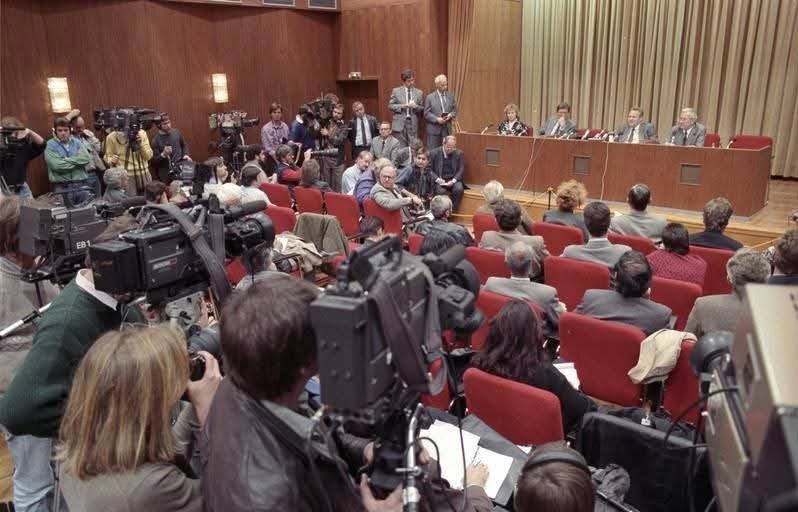
(Later it was revealed that the announcement was to be made the next afternoon, so that the border guards could be informed first. Schabowski also had to clarify that East Germans would have to apply for a visa from the competent authorities.)
Within minutes, the news that the Wall was open circulated. It was not, but crowds began to gather at crossing points and the guards had no instructions. Krenz, stuck in a Central Committee session, had no idea what was happening, and by the time he found out, the crowds were impossible to control. Eventually, the border guards at Bornholmer Strasse took the initiative to open the gates…
In Moscow, Gorbachev only declared the next morning to the East German authorities: “You have made the right decision.”
The official demolition started the following June. It was one of the events that signaled the start of the collapse of communism in Central and Eastern Europe. The end of the Cold War was declared at the Malta Summit in early December, and the reunification of Germany was achieved in October of the following year.
Till the next stack, ἐρρῶσθε καὶ εὐδαιμονεῖτε.
Whether it’s just the price of a single frappé coffee or a book, every contribution matters. Donations help cover research, writing, and the resources needed to keep sharing my passion for uncovering the past and bringing history, archaeology, and culture to life.
ακολουθεί το κείμενο στα ελληνικά
Το Τείχος του Βερολίνου έπεσε σαν σήμερα το 1989, όμως πολύ νωρίτερα είχε καταφέρει να πέσει κρυφά για ένα μόνο βράδυ. Και το είχε ρίξει ένα τραγούδι.
Ήταν το Heroes και οι δυο εραστές που τους χωρίζει η Ιστορία και που σήμερα οι στίχοι μπορεί να ακούγονται κάπως αισιόδοξα σπαρακτικοί, αλλά τότε η κυριολεξία τους δεν άφηνε κανένα άλλο περιθώριο από το να γίνει ένας ύμνος στην Ελευθερία.
Είναι Ιούνιος του 1987.
Σχεδόν 10 χρόνια μετά τα μυθικά Berlin Years του, ο David Bowie δίνει συναυλία στο Δυτικό Βερολίνο, μπροστά από το Reichstag και σε απόσταση αναπνοής από το Τείχος. Πριν παίξει το Heroes, ξεκιναει απευθυνόμενος σε όσους βρίσκονται πίσω από το παραπέτασμα. Λένε πως ο Bowie είχε ζητήσει να στρέψουν επίτηδες τις ηχητικές εγκαταστάσεις προς την πλευρά του Ανατολικού Βερολίνου. Κανείς δεν μπορούσε να εμποδίσει τη μουσική να φτάσει στους ανθρώπους και οι χιλιάδες ανατολικογερμανοί που είχαν συγκεντρωθεί για να τον ακούσουν λαθραία από την άλλη πλευρά φώναζαν συνθήματα ζητώντας να πέσει το Τείχος και να τους απεγκλωβίσει ο Γκορμπατσόφ. Ακολούθησαν συμπλοκές και συλλήψεις, όμως αυτή ήταν μία από τις πρώτες φορές που το κλίμα μάλλον έμοιαζε να αλλάζει. Μια εβδομάδα αργότερα θα ακολουθούσε η επίσκεψη του Reagan και η ιστορική ομιλία του στην Πύλη του Βρανδεμβούργου με το “Mr. Gorbachev, tear down this wall!”.
The rest is history, αλλά πολλά χρόνια αργότερα σε συνέντευξή του ο Bowie θα πει πως αυτή ήταν η πιο συναισθηματικά φορτισμένη συναυλία που έχει δώσει και πως έκλαιγε ακούγοντας από την άλλη πλευρά τους ανθρώπους να τραγουδάνε μαζί του και να ζητωκραυγάζουν σαν να μην τους χώριζε τίποτα πια.
Το 2016, την ημέρα του θανάτου του Bowie, το Υπουργείο Εξωτερικών της Γερμανίας τον αποχαιρέτησε ευχαριστώντας τον για τη συμβολή του στην πτώση του Τείχους, αποκαλώντας τον και αυτόν έναν ήρωα.
Κι ακόμα και αν με ιστορικά κριτήρια η συναυλία αυτή δεν φαίνεται να καθόρισε σε τίποτα τα γεγονότα που ακολούθησαν, ακόμα και αν στην πραγματικότητα το Heroes δεν έριξε ποτέ το Τείχος του Βερολίνου, για ένα βράδυ κατάφερε να ενώσει δυο τόσο μακρινούς κόσμους ακριβώς όπως είχαν προφητεύσει οι ίδιοι του οι στίχοι.
We can be heroes just for one day!
Πώς όμως έπεσε στ’ αλήθεια το τείχος - Η Ειρηνική Επανάσταση
Δύο χρόνια και τέσσερις μήνες μετά την περιοδεία Glass Spider του Bowie, στις 7-8 Οκτωβρίου 1989, ο Γκορμπατσόφ επισκέφθηκε την Ανατολική Βερολίνο για επίσημες εορταστικές εκδηλώσεις. Κατά τη διάρκεια της παρέλασης στην λεωφόρο Unter den Linden, χιλιάδες Ανατολικογερμανοί τον επευφημούσαν, φωνάζοντας «Γκόρμπι, βοήθησέ μας! Γκόρμπι, μείνε εδώ!», ενώ οι διαδηλώσεις της αντιπολίτευσης συνεχίζονταν τις επόμενες μέρες.
Ο Χόνεκερ δίστασε αν θα δώσει διαταγή στις δυνάμεις ασφαλείας να επέμβουν και, χωρίς υποστήριξη από τη Μόσχα, παραιτήθηκε στις 18 Οκτωβρίου.
Ο διάδοχός του, Έγκον Κρέντς, αντιτάχθηκε στην καταστολή των διαδηλώσεων και διαβεβαίωσε τον Γκορμπατσόφ ότι παρά τις δυσκολίες, θα αντέξει. Επιστρέφοντας από τη Μόσχα, ο Κρέντς αποφάσισε να χαλαρώσει τους περιορισμούς ταξιδιού προς τη Δύση (χωρίς να τους καταργήσει), σε μια προσπάθεια να μειώσει τις εντάσεις.
Η βιαστικά προετοιμασμένη απόφαση δόθηκε στον Γκύντερ Σαμπόβσκι, μέλος του Πολιτικού Γραφείου, που δεν ήταν στη σύσκεψη αλλά προετοίμαζε ενημέρωση των δημοσιογράφων. Ο Σαμπόβσκι ρίχνοντας γρήγορη ματιά ανακοίνωσε ότι οι πολίτες της Ανατολικής Γερμανίας μπορούν να φύγουν «από οποιοδήποτε σημείο συνοριακής διέλευσης». Οι έκπληκτοι δημοσιογράφοι ρώτησαν πότε θα ισχύσουν οι νέοι κανονισμοί.
Ψάχνοντας άσκοπα τα έγγραφά του, απάντησε «σύμφωνα με τις πληροφορίες μου, από τώρα». Ισχύει και για τα ταξίδια στο Δυτικό Βερολίνο; Ο Σαμπόβσκι κοίταξε ξανά τα χαρτιά, σήκωσε τους ώμους, ανακάτεψε τα έγγραφα και απάντησε «Η μόνιμη έξοδος μπορεί να γίνει από όλα τα σύνορα από την Ανατολική Γερμανία προς τη Δυτική Γερμανία και προς το Δυτικό Βερολίνο αντίστοιχα». Η επόμενη ερώτηση ήταν: «Τι θα γίνει τώρα με το Τείχος του Βερολίνου;» Ο Σαμπόβσκι μουρμούρισε μια ακατανόητη απάντηση και έκλεισε την συνέντευξη Τύπου.
(Αργότερα αποκαλύφθηκε ότι η ανακοίνωση επρόκειτο να γίνει το επόμενο απόγευμα, ώστε να ενημερωθούν πρώτα οι συνοριοφύλακες. Ο Σαμπόβσκι επίσης όφειλε να διευκρινίσει ότι οι Ανατολικογερμανοί θα έπρεπε να υποβάλουν αίτηση για βίζα στις αρμόδιες αρχές)
Μέσα σε λίγα λεπτά, η είδηση ότι το Τείχος ανοίγει διαδόθηκε. Δεν είχε ανοίξει όμως, αλλά συγκεντρώθηκαν πλήθη στα σημεία διέλευσης χωρίς οι φρουροί να έχουν οδηγίες. Ο Κρέντς, που ήταν εγκλωβισμένος σε συνεδρίαση της Κεντρικής Επιτροπής, δεν ήξερε τι συνέβαινε, και όταν το έμαθε, τα πλήθη ήταν πλέον αδύνατο να ελεγχθούν. Τελικά, οι συνοριοφύλακες στη Bornholmer Straße πήραν την πρωτοβουλία να ανοίξουν τις πύλες...
Στη Μόσχα, ο Γκορμπατσόφ μόνο το επόμενο πρωί δήλωσε στις Ανατολικογερμανικές αρχές: «Πήρατε τη σωστή απόφαση.»
Η επίσημη κατεδάφιση ξεκίνησε τον επόμενο Ιούνιο. Ήταν ένα από τα γεγονότα που σηματοδότησαν την αρχή της κατάρρευσης του κομμουνισμού στην Κεντρική και Ανατολική Ευρώπη. Το τέλος του Ψυχρού Πολέμου ανακοινώθηκε στην Σύνοδο της Μάλτας στις αρχές Δεκεμβρίου και η επανένωση της Γερμανίας επιτεύχθηκε τον Οκτώβριο του επόμενου έτους.