


“History worth reading. Stories worth remembering.”
“Τη γλώσσα μου έδωσαν ελληνική / το σπίτι φτωχικό στις αμμουδιές του Ομήρου”
(The language they gave me was Greek; / a poor house on Homer’s shores.)
Odysseus Elytis. The Axion Esti (The Passion, Psalm II)
February 9th, dedicated to Greece’s national poet Dionysios Solomos, has been established as World Greek Language Day following a unanimous decision by UNESCO’s 90 member states, marking a historic recognition of the Greek language’s contribution to global culture.
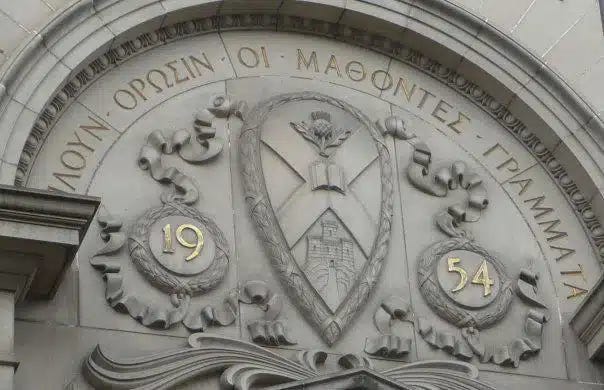
The initiative to establish a day dedicated to the Greek language began in 2014, inspired by Professor Giannis Korinthios, then President of the Federation of Greek Communities and Brotherhoods in Italy (FCCEI). Classical high schools and the Greek Community of Naples and Campania led the mobilization. Initially, there was a draft law titled “Establishment of World Hellenophony and Greek Culture Day” proposing May 20th, possible birth date of Socrates. Ultimately, February 9th marks the death of Dionysios Solomos (1798–1857), the poet who penned Greece's national anthem—making it the perfect date for International Greek Language Day.
“Through the establishment of this world day, we aim to highlight the fundamental role played by the Greek language throughout the centuries, substantially contributing to the establishment of both European and global culture. In antiquity, the Greek language became the carrier of the formation and transmission of significant scientific theories, philosophical considerations, and literary texts. Shortly thereafter, the most important texts of Christianity were written in Greek to spread worldwide. Over the centuries, its contribution as a means of preserving and disseminating Greek culture has been decisive, and it survives to this day, in its modern form, as one of the world’s longest-living languages,” states a circular from the Greek Ministry of Education.
In November 2025, during the 43rd UNESCO General Conference in Samarkand, Uzbekistan, February 9th was officially proclaimed as World Greek Language Day:
“Following the decision adopted at the recent UNESCO General Conference concerning the Greek language and its contribution to universal culture, the United Nations Educational, Scientific and Cultural Organization, in accordance with United Nations General Assembly Resolution 71/328 on multilingualism and the importance of linguistic diversity for cultural diversity, has proclaimed 9 February of each year as World Greek Language Day.”
Whether it’s just the price of a single frappé coffee or a book, every contribution matters. Donations help cover research, writing, and the resources needed to keep sharing my passion for the Greek language and culture:
Events are taking place in educational institutions in Greece and university Greek language departments worldwide to celebrate the day.
A few years ago, on the occasion of World Greek Language Day, the General Secretariat of Public Diplomacy of the Ministry of Foreign Affairs published a YouTube campaign titled “Did you know you speak Greek?”:
On the occasion of February 9th, 2026 celebrations, Romania’s President Nicușor Dan emphasized to the Athens News Agency the decisive role of the Greek language in shaping Europe’s cultural heritage, philosophy, sciences, and arts, and in affirming Romania’s identity as a modern, democratic European state:
“The Greek language was the foundation on which philosophy, sciences, arts, and political concepts supporting modern democracies developed. Through it, reflection on citizen freedom and dignity, respect for law and conscience, and responsibility for societies’ collaboration in service of the common good, peace, and prosperity was shaped. In today’s context, where democracies are tested by resurgent extremism and value crises, the need for renewed reflection on Europe’s humanistic heritage—transmitted through the Greek language and great figures of the Greek people—becomes even more urgent.”
Spain, particularly Catalonia—which prides itself on maintaining unquenchable roots with Greece through the Phocaean colony at Emporio (Empúries)—highlights the special affection, as noted by distinguished Hellenist, Cavafy translator, and corresponding member of the Athens Academy, Eusebi Ayensa Prat: “The Spanish State (and Catalonia in particular) is historically a country that has produced great Hellenists. Focusing only on Catalonia, names like Carles Riba (Cavafy’s first Catalan translator), Josep Alsina, or Alexis-Eudald Solà rank among Europe’s top Hellenists of the last century. Universities have significant schools for teaching mainly ancient Greek—which often serves as a gateway to modern Greek—but also modern Greek literature schools.”
As Mr. Ayensa explains, “although the law allows ancient Greek to be offered in both years even with very few students, in practice many school directors (with educational inspectorate support) prevent it. This forces the teacher—with few students—to teach another subject deemed more ‘useful’ for the school, without considering that Greek humanism deeply nourishes our cultural roots as a Mediterranean country.” He emphasizes the interest of many students, thanks to mobility and Erasmus programs, who discover Greece, love the place and our language, and many are initiated into it.
Italian author Elena D’Ambrogio Navone on the same occasion also noted: “The Greek language is a source that spans the centuries. In every word lies the breath of the Aegean, the courage to question existence itself. In my book The Nights of Kos, tradition is an echo of living presence; the islands, the light, the memories transform the Greek language into an emotional experience, like an inner homeland. Its future cannot but continue to be bright. As long as someone writes, loves, and dreams in Greek, this language will never cease to be reborn.”
Francesco Neri, director of the Italian Institute in Athens, fluent in Greek and ardent admirer of modern Greek literature, underscores his experience and conveys the enduring attraction of Greek language and letters in the neighboring country: “Like thousands of Italians, I began learning ancient Greek at Classical High School (Liceo Classico) at age 14, and I can say I never abandoned it. My love for ancient civilization later awakened my desire to know modern Greece and its language.” He adds: “The study of Greek in Italy as a compulsory subject in Classical High Schools is an excellent opportunity to connect with the invaluable heritage of antiquity. The fact that Italy is the country in the world where ancient Greek is studied more than anywhere else enriches relations of all kinds between our two countries and makes them, in a way, special.”
What is the oldest Greek inscription though, not using Mycenaean Linear B, but the letters later adopted via the Greek colonies in Italy by the Etruscans, from them the Romans, and from the Romans the entire Western world?
Behind the paywall:
The Dawn of Writing: Trace the Greek alphabet’s first steps in antiquity—from the enigmatic inscriptions of Nestor’s Cup to its widespread adoption across the Mediterranean.
The Voice of Epic: Experience the earliest artfully crafted monuments of Greek literature. Includes exclusive read-alouds of the Iliad, Odyssey, and Theogony prooimia (preludes) in Modern Greek, and the Apostle Paul’s ‘Hymn to Love’ in the original Ancient Greek text.
A Living Legacy: Journey through the evolution of the language—from the Hellenistic lingua franca and the Koine of the Bible to the preservation of wisdom by Byzantine scholars and the poems of modern Nobel laureates. Read a humanistic Byzantine epigram—an ode to Plato and Plutarch—and discover Solomos’ reference to the American Declaration of Independence in his Hymn to Liberty, the origin of the Greek national anthem.
