


“History worth reading. Stories worth remembering.”
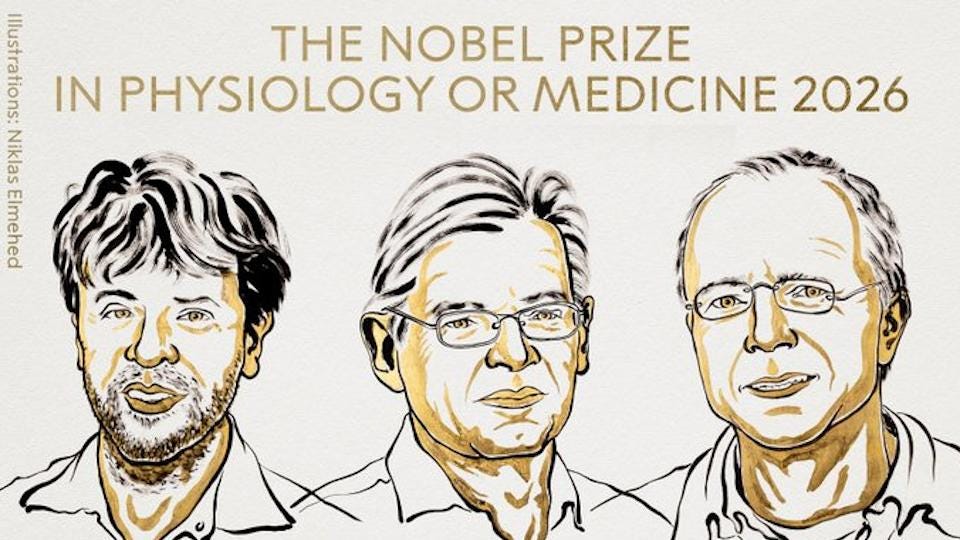
The Nobel Prize in Physiology or Medicine was announced a few days ago, and the story behind it is so cool that I told my kids about it last night. I thought I’d write it down here too, roughly the way I told it to them, with a bit of history added to make it interesting. I’m passing on the science as I understood it, so go easy on me.
For the original text in Greek, scroll down.
So, somewhere in fresh water lives a tiny green alga called Chlamydomonas. It has nothing to do with chlamydia. The two simply share the chlamys in their names, the short cloak worn by the ancient Greeks. In the alga, the name refers to the wall enclosing the cell. In chlamydia, it refers to what the first researchers saw under the microscope: something that seemed to wrap the nucleus of the infected cell like a cloak.
Chlamydomonas has a light-sensitive eyespot, and when it picks up light it can swim towards it or away from it. A German biophysicist, Peter Hegemann, was curious to know how the alga managed this, and he started looking into it as early as 1985. After years of work he came to suspect that the secret lay in a protein in the cell membrane, one that does more than detect light. It also opens a passage for electrically charged particles.
Enter, Georg Nagel. Working with Hegemann and their research groups, he showed that this is exactly how the protein works: in essence, it is a tiny door in the cell membrane. To test it, he put the alga’s genes into frog eggs and studied how the proteins they produced behaved. They named them channelrhodopsins (I know, it’s a mouthful: channel, plus rhodopsin, the pigment in our eyes that lets us see in dim light, from the Greek rhódon, “rose”, and ópsis, “sight”). Their key findings were published in 2002 and 2003. One of these proteins, opens when blue light hits it. Positively charged particles (ions) then flow into the cell and change its electrical state.
Why does this matter?
Here is the really interesting part. Put the gene that carries the instructions for building this door into another cell, and that cell becomes sensitive to light too. If the cell is a neuron, you can now switch it on with pulses of light. That is where optogenetics begins.
This is where Karl Deisseroth comes in, a psychiatrist at Stanford who wondered what would happen if he put the door into nerve cells. In 2005 he showed that a little blue light could “switch on” a neuron whenever you liked. Soon after, he did it in living mice, using very thin optical fibres inside the brain. Turn on the light, a specific group of neurons fires, and the mouse does something specific.
Deisseroth, by the way, had just gone to bed when Stockholm called. He was, as he put it, somewhere between sleep and waking, and for a moment he didn’t know whether he was dreaming. Not a bad way to be woken up. Here he is announcing the news to his children:
Not everyone greets the Nobel with the same emotion, mind you. In 2007 Doris Lessing was getting out of a taxi outside her London home, carrying bags of shopping, when the reporters waiting for her told her she had won the Nobel Prize in Literature. Her first reaction was “Oh Christ!” Shortly afterwards came “I couldn’t care less.” She explained that she had already won all the prizes in Europe, “every bloody one”, so this was just one more. She was, after all, 87 years old, the oldest person ever to receive the literature prize.
Why is the discovery of how channelrhodopsins work so important?
As far as I can tell, this years Nober prize in Medicine rewards a tool more than a single discovery, a tool without which many other discoveries would never have happened.
Until then, we looked at the brain the way you look at Christmas lights. We could see which ones came on when we were afraid or remembering something, but it was hard to tell whether they caused the fear or simply came along with it. Correlation, after all, is not causation.
Put simply, optogenetics gave us the switch: you flip it and watch what happens.
In small clinical studies, blind patients with retinitis pigmentosa have partly regained their sight. We shouldn’t expect miracles overnight; it is mainly a research tool. Then again, without it our understanding of depression, epilepsy and addiction would be moving far more slowly.
And it all started with someone who was simply curious how on earth an alga finds the sun. With the kind of basic research some people dismiss as a luxury because it has no immediate practical use.
Curiosity about an alga became a switch for the human brain.
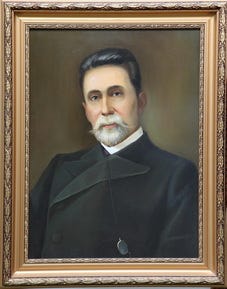
And the gentleman in the photo?
That’s Ludwig Reinhard. He was born in 1847 near Pereyaslav, in what is now Ukraine, into a family of German descent with even older French roots. His ancestors were Protestants who left France after the St Bartholomew’s Day massacre in August 1572, when the slaughter of the Huguenots, as French Protestants were known, began in Paris. Those who got away took refuge in the German states.
Ludwig became a botanist and an algologist (the algae kind, not the pain kind; álgos is Greek for pain). He studied natural sciences at the University of Kharkiv, taught botany there, and in 1905 became its first elected rector.
So what does he have to do with any of this, you ask?
In 1876 Reinhard described how a species of Chlamydomonas “mates”. Twelve years later the French botanist Pierre Dangeard named a species Chlamydomonas reinhardtii in his honour. That is the alga in our story. It grows easily and multiplies fast, and so in the 20th century it became one of biologists’ favourite lab animals (if an alga can be called a lab animal).
From one thing to another
Read on to find out how curiosity didn’t kill the cat after all, and where it took a few people who wanted to know how the universe works.
Archimedes in the bath: a suspicious king, and a problem that followed a mathematician into the bathtub.
Reading beneath the prayers: the ancient secrets a Danish philologist found with a magnifying glass in a medieval prayer book.
Measuring the Earth with a shadow: how Eratosthenes worked out the size of our planet more than two thousand years ago.
A glow that shouldn’t have been there: a glass tube, a piece of cardboard, and the discovery that let doctors look inside the human body.
A bacterium from a hot pool: what a small resident of Yellowstone has to do with the PCR test you took during the pandemic.
A heart pill with other ideas: how a disappointing angina drug became a treatment for erectile dysfunction.
And finally: what Ozempic has in common with a venomous lizard from the Arizona desert.
For less than €4 a month, join the Historiophiles Society.
On iPhone? Subscribe in your browser at studyinghistory.gr for the lower price.
Not ready to upgrade? A like or restack helps other readers find Studying History. And if you would rather support one essay at a time, you can always treat me to a frappé coffee:
Who you will be supporting:
