


“History worth reading. Stories worth remembering.”
Over the past few months, Nolan’s Odyssey may have been talked about more than it was watched, and not always kindly, but in my opinion that’s a good thing. Not because I believe that any publicity is good publicity, but because I’ve watched interest in classical literature come back to life. I’ve watched people realise that we have been thinking and acting the same way for thousands of years, trying to make sense of the world with the same curiosity and the same hunger to learn, whether we’re trying to drive the suitors out of our palace or arguing with our wife about how much longer our mother-in-law is staying.
For the original text in Greek, scroll down
One of the things people talked about most was a phrase you hear again and again in the film but won’t find anywhere in Homer: the famous “Zeus’s Law”.
Nolan, who jokes that he co-wrote the screenplay with Homer, explained to the Los Angeles Times what he means by it: “It is the golden rule, the idea that you treat people the way you want to be treated (…) because it also allows society to function.”
The phrase itself is Nolan’s invention, written for the film, but the idea behind it is thousands of years old, and the Greeks had one word for it: xenia.
The key word here is xenos, which in ancient Greek meant both “stranger/foreigner” and “guest”. The two meanings were two sides of the same coin. The weary traveller knocking at your door was a stranger to you until that moment. If you let him in, the next moment he was sitting at your table as your honoured guest. And since this is ancient Greece, he could always be something more than human.
Explore the final chapters:
The god at the door: why the Greeks put strangers under the protection of Zeus himself and how an ancient Corfu tombstone explains the ancient Greek word for “consulate”.
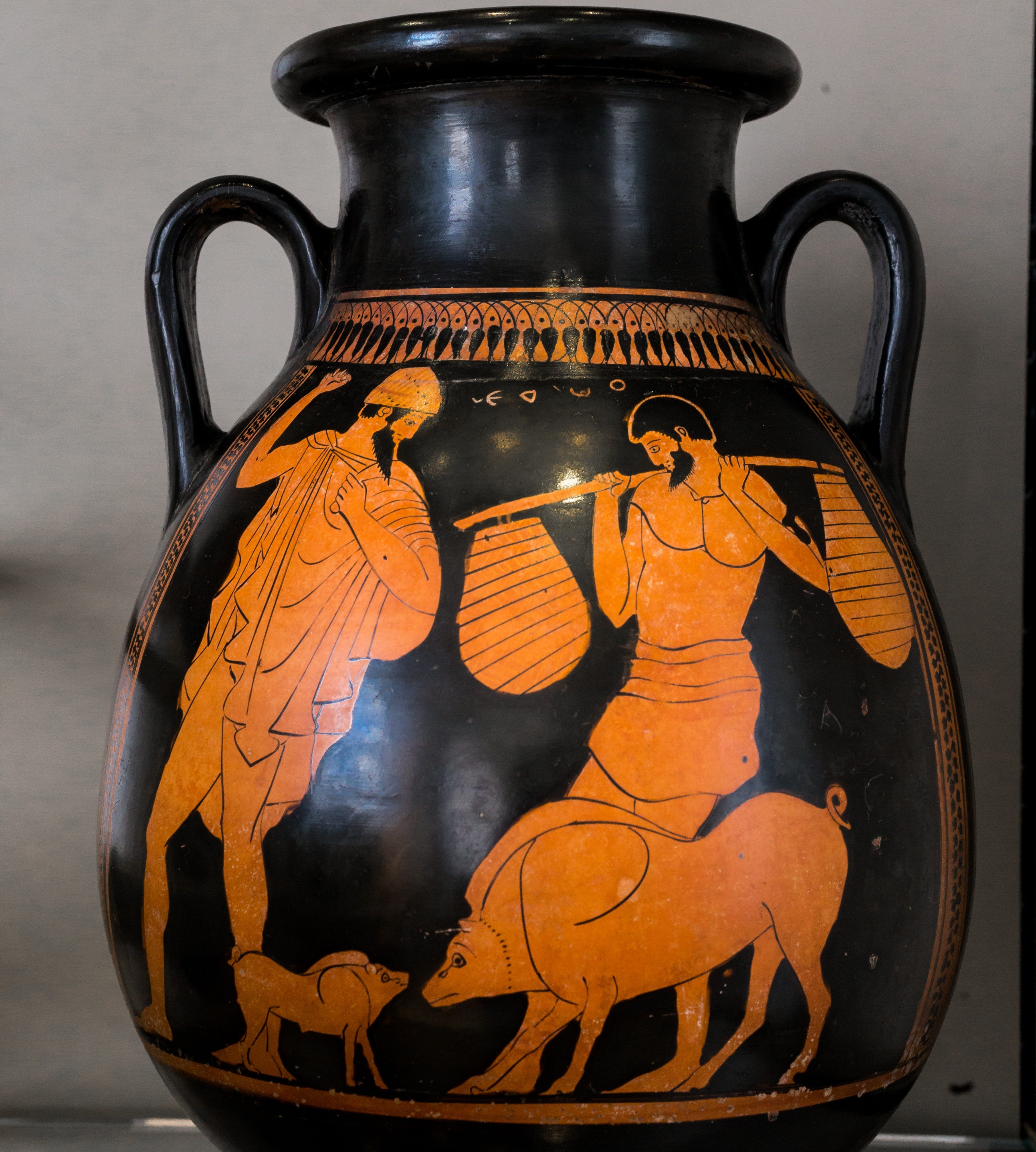
Eumaeus the swineherd: the poorest host in the Odyssey, and the clearest statement of the law.
Philemon and Baucis: how Ovid told the myth of an old couple who realised Zeus was sitting at their own table, and how the Apostle Paul was later mistaken for Hermes because of xenia.
The Greek door and the Italian town: a line of Homer above a Mycenae inn, the beautiful woman it’s named after, and the Italian town that asked Athens for a stone from the Acropolis and got something that connects the dots.
Modern Greek xenia: the “submarine” you can’t refuse, the fight over the bill, and the plate that never goes back empty.
And finally, why Nolan’s film is worth taking seriously, whatever you thought of it.
For less than €4 a month, join the Historiophiles Community.
On iPhone? Subscribe in your browser at studyinghistory.gr for the lower price.
Not ready to upgrade? A like or restack helps other readers find Studying History. And if you would rather support one essay at a time, you can always treat me to a frappé coffee:
Who you will be supporting:

