


“History worth reading. Stories worth remembering.”
Once upon a time, there was Maria Anna Cecilia Sofia Kalogeropoulos. If the name doesn’t ring a bell, it is because she later chose to introduce herself to the world with the shorter, more elegant name: Maria Callas.
(To read the original text in Greek, scroll down)
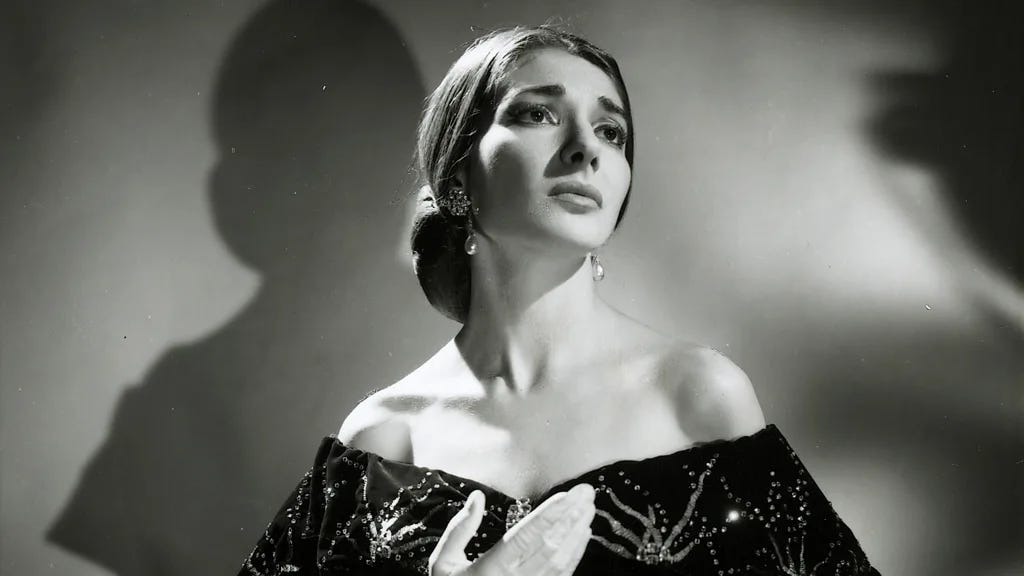
Her story could easily begin exactly like a classic fairy tale, suspended somewhere between the Ugly Duckling and Cinderella. It’s a tale without wicked stepmothers or magic wands, but it features a swan who, before realizing her true nature, went through hell at the hands of her own mother and her peers. It is a story woven with exile, war, doubt, sweeping romances, and glory—so much glory. Ultimately, this fairy tale speaks of a voice welling up from the darkest depths of the human soul. And it is a voice that continues to touch millions of souls today, 49 years after her passing.
Born in New York to Greek immigrants, little Maria was hardly the family favorite, no matter how much her imposing name suggested otherwise. While her American birth certificate originally registered her simply as “Sophie Cecilia Kalos”—as her father had already begun shortening their surname for ease in the US—her Greek Orthodox baptism bestowed upon her the lengthy combination “Maria Anna Cecilia Sofia Kalogeropoulos.” The sheer magnitude of this name reflected both the Western custom of multiple middle names and the immense, aristocratic social ambitions of her mother. Hidden within this long string of names was an ironic yet prophetic detail: the name “Cecilia” belongs to the patron saint of music. Despite this, growing up in the heavy shadow of her older sister, Jackie, who possessed the sociability and conventional beauty the era demanded, Maria experienced the cruelest form of rejection early on: the indifference of her own mother.
Evangelia Kalogeropoulos harbored no particular affection for that shy, introverted girl with the thick myopic glasses and extra weight. This lack of maternal acceptance seemingly opened a wound that never truly healed, driving young Maria to seek comfort in food, but also in an unexpected sanctuary: singing. The family’s “ugly duckling” discovered her ultimate weapon at an early age. It was a raw voice, yet one possessing such staggering intensity that it could make time stand still. Singing wasn’t just a talent; it was her lifeline, her way of demanding the love and attention she was starved of at home.
The family’s return to Athens in 1937, coinciding with the definitive collapse of her parents’ marriage, proved to be a critical crossroads. At the Athens Conservatoire, under the guidance of the great Spanish soprano Elvira de Hidalgo, her voice began to acquire technique and structure. History, however, had other plans. World War II and the Axis Occupation plunged Greece into absolute darkness. Survival became the sole objective, and art was transformed into a means of securing a plate of food.
Unlock the final chapters:
The dark rumors of the Occupation: Callas’ relationship with the Nazis and the rift with her mother.
The birth of “La Divina”: Her metamorphosis from duckling to swan and the “authoritarian” behavior.
The ultimate price of fame: A scandal in Rome, the hostility of the press, and her tragic romance with Aristotle Onassis.
An enduring legacy: The new Maria Callas museum in Athens, Angelina Jolie, and Callas as a symbol for women branded as “too difficult.”
Finally: A curated multimedia archive featuring her most revealing English interviews, videos with her ultimate, signature performances and a Spotify best-of playlist, along with an exceptional Greek podcast and a historical Greek documentary.
Unearthing the true, unfiltered history of Maria Callas, takes more than a quick online search. It requires many hours of meticulous research while I balance fatherhood, my work shifts, and my studies in archaeology and art history. If you value this kind of authentic, deep-dive history and want to support the effort behind it, upgrading to a paid subscription makes all the difference. Join our community to unlock the final, gripping chapters of Maria Callas’ story.
